
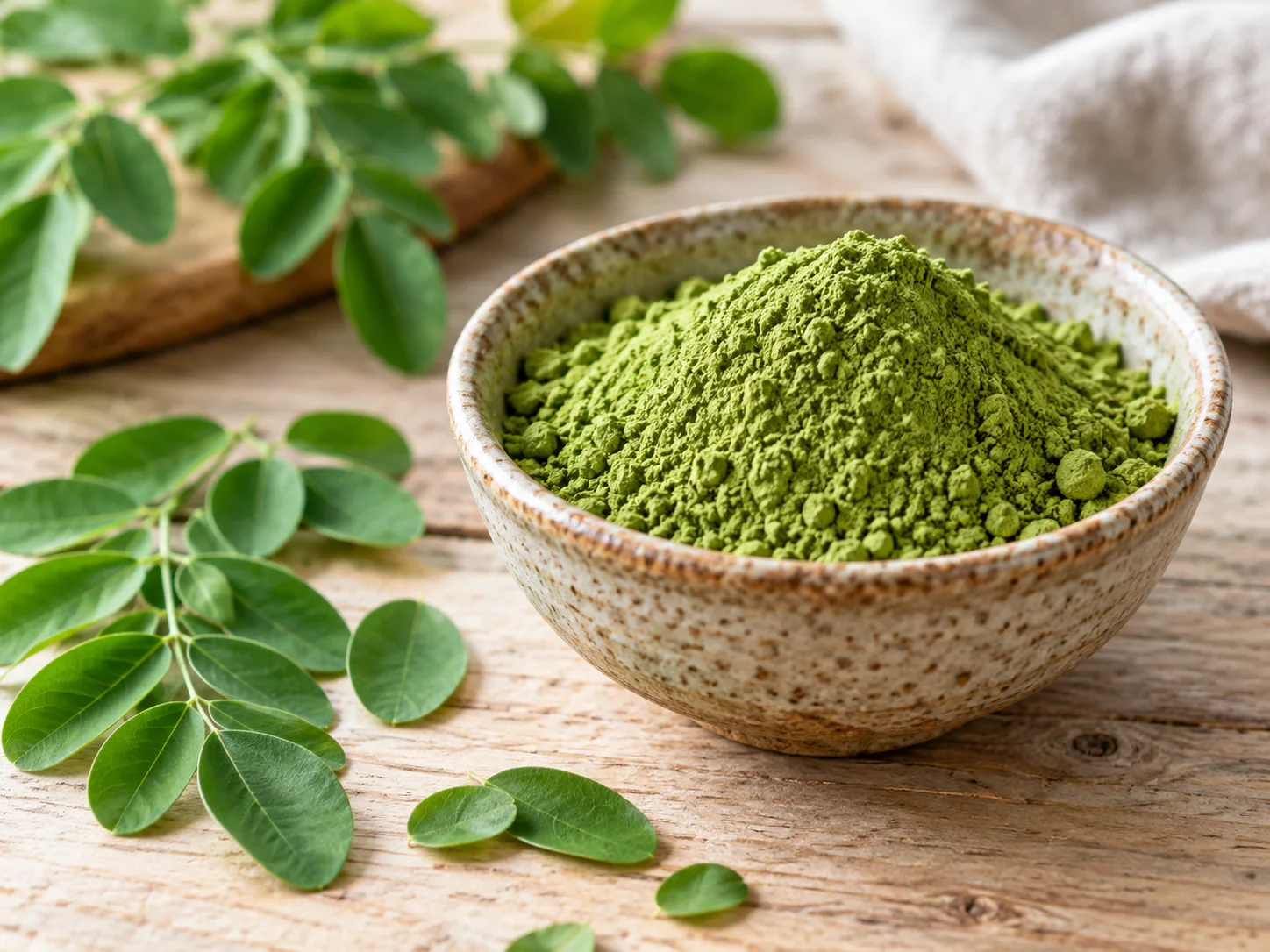
Moringa powder benefits come mainly from nutrition, not medicine. It delivers plant protein, iron, calcium, potassium, and vitamins A, C, and B6. Producers dry and grind Moringa oleifera leaf to make it. Early human research points to modest effects on blood sugar and cholesterol. Most of that evidence remains preliminary.
By Carl J., Owner, Mivoro · Last updated 22 September 2026
What Is Moringa Powder Good For?
Most people use moringa powder as a whole food, not as a treatment for any condition. They stir it into smoothies, soups, sauces, or yogurt. This adds plant-based protein and micronutrients that a typical Western diet often lacks, particularly iron, calcium, and vitamin A. Moringa is a nutrient-dense leaf, and the honest case for it is nutritional, not medicinal.
What Nutrients Does Moringa Leaf Powder Contain?
Moringa leaf offers an unusually well-rounded nutrient mix for a single plant food. Fresh leaves carry meaningful amounts of vitamin A, vitamin C, vitamin B6, and riboflavin, along with iron and magnesium. Drying removes water weight, so the powder concentrates these nutrients further. Researchers have also identified antioxidant plant compounds in the leaf, including flavonoids, phenolic compounds, and carotenoids. This helps explain why moringa shows up so often in nutrition research. Much of that research comes from regions where the tree grows, including Sri Lanka, India, and parts of Africa (Springer Nature nutritional composition study).
What Does the Research Say About Moringa Oleifera Benefits?
This is the part worth reading carefully. A lot of moringa content online overstates what the science actually supports. A review of human trials looked at moringa leaf taken daily over several weeks. Doses ranged from about 2.4 to 8 grams. Researchers linked that dose range to modest reductions in blood sugar in people with prediabetes or type 2 diabetes. A smaller study also found some improvement in cholesterol and triglyceride markers in people with dyslipidemia (Drugs.com clinical dosage summary).
Other commonly cited benefits include anti-inflammatory effects and protection against oxidative stress. Research on these still rests mainly on animal and lab studies rather than human trials (Healthline nutrition and benefits overview). None of this makes moringa a treatment for diabetes, high cholesterol, or any other condition. It should not replace medication or a doctor’s guidance. Still, the interest in moringa rests on real, if early-stage, research rather than pure marketing.
How Much Moringa Powder Should You Take a Day?
There is no single official dose. Moringa is a food, not a regulated drug, and the FDA has not evaluated it for safety or effectiveness. The clinical studies above used amounts of roughly 2.4 to 8 grams of leaf powder daily. That works out to about half a teaspoon to just over a tablespoon. Most people start with a small amount, around half a teaspoon to a teaspoon a day, mixed into food or a drink. They adjust from there based on how they tolerate it. Always follow the serving guidance on your product. Check with a healthcare provider before taking a therapeutic amount rather than a food-level amount.
Is Moringa Powder Safe to Take Daily?
For most healthy adults, moringa leaf powder appears well tolerated as a food ingredient, and people rarely report side effects. Safety research still has gaps, though, so a few groups should be more careful. Anyone taking medication for diabetes or thyroid conditions should talk to a healthcare provider first. Moringa may affect blood sugar, and some evidence suggests it can change how the body processes certain drugs. Doctors generally advise pregnant women to avoid moringa leaf, and especially moringa root or bark preparations. Animal research has raised questions about effects on pregnancy that human studies have not ruled out (Drugs.com clinical dosage summary).
Is Moringa Powder Worth Taking?
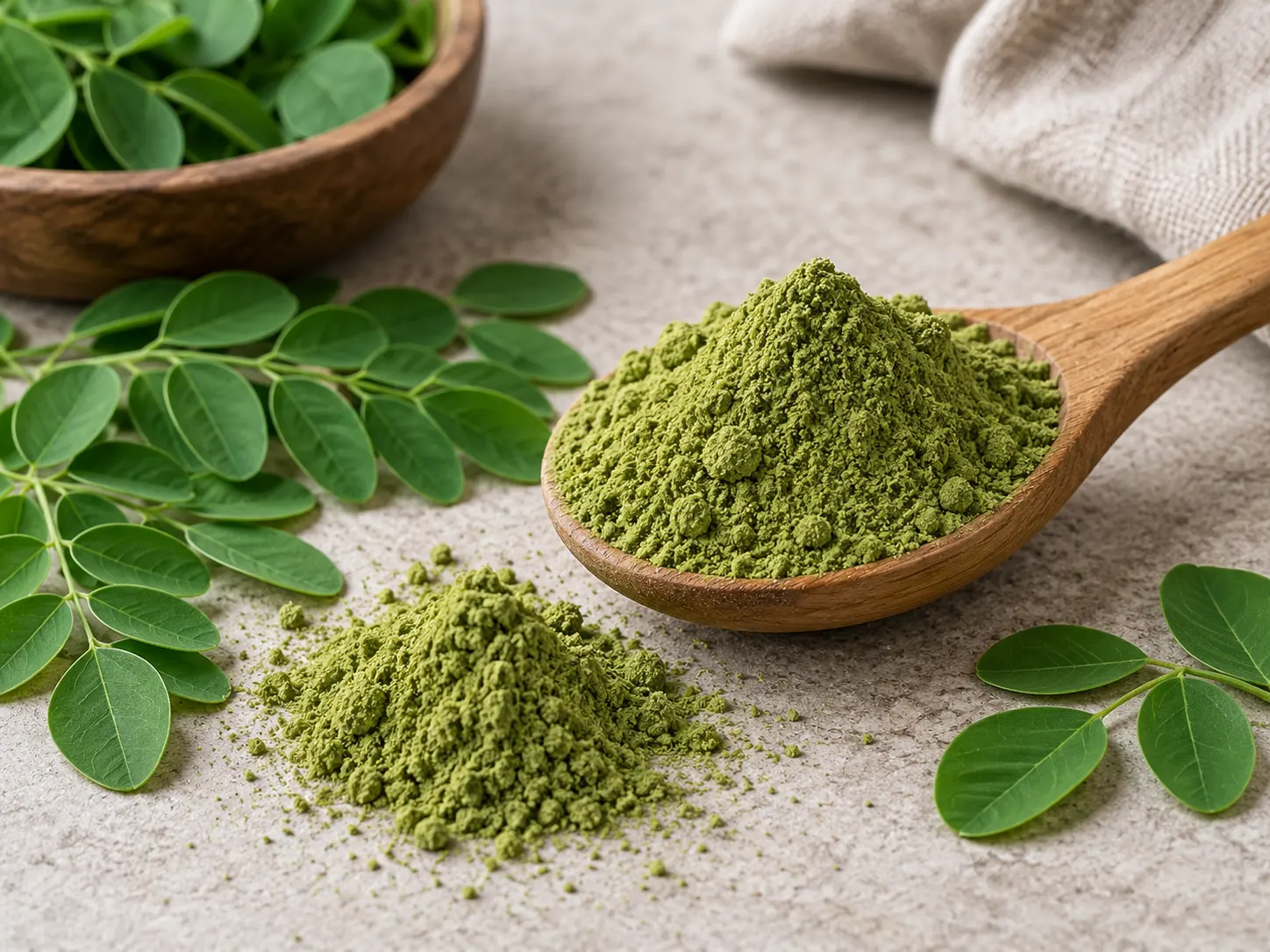
Moringa powder is a reasonable choice if you want a nutrient-dense addition to meals and smoothies. It has a genuinely strong micronutrient profile. Early research also supports modest benefits for blood sugar and cholesterol in some people. It is not a cure or a fast fix for a specific health condition. No honest source should tell you otherwise. The real moringa powder benefits are nutritional rather than medicinal. So the realistic answer is this: it is worth trying as a whole food addition to your diet, with ordinary expectations. Talk with your doctor first if you are pregnant, nursing, or on medication.
Frequently Asked Questions
What is moringa powder and where does it come from?
Producers make moringa powder by drying and grinding leaves from the Moringa oleifera tree. This fast growing plant is native to South Asia. Farmers now grow it across South Asia, Africa, and the Caribbean, including Sri Lanka. The leaf has a long history in South Asian cooking and traditional practice.
How much moringa powder is a typical daily serving?
Clinical studies of moringa leaf powder have generally used amounts between about 2.4 and 8 grams a day. That is roughly half a teaspoon to just over a tablespoon. Many people start with about half a teaspoon mixed into food or a drink. They then follow the serving size listed on their specific product.
What nutrients does moringa leaf powder contain?
Moringa leaf is a source of plant protein, iron, calcium, potassium, magnesium, and vitamins A, C, and B6. It also contains antioxidant plant compounds such as flavonoids and phenolic compounds. Drying concentrates these nutrients compared to fresh leaves. Removing water weight increases the nutrient density per gram.
Is moringa safe to take every day?
Healthy adults generally tolerate moringa leaf powder well in ordinary amounts. Research on long term daily use still has gaps, though. The same caution applies to anyone with a medical condition, on prescription medication, or who is pregnant or nursing. Check with a healthcare provider before making it a daily habit.
Can moringa interact with medication or be taken while pregnant?
Moringa may interact with medications for diabetes and thyroid conditions. Laboratory research suggests it could also affect how the body processes other drugs. Mention it to your healthcare provider if you take prescription medication. Doctors generally advise pregnant women to avoid moringa leaf. Animal studies have raised questions about its effects during pregnancy that researchers have not fully studied in people.
A Note on Sourcing
Mivoro mills its Premium Moringa Powder from Moringa oleifera leaves grown in Sri Lanka, with nothing added and no fillers. As with any moringa product, follow the serving guidance on the package. Speak with a healthcare provider before using it to manage a specific health condition.
This article shares general nutrition information, not medical advice. It does not diagnose, treat, cure, or prevent any disease. The FDA has not evaluated moringa for safety or effectiveness. Talk to a healthcare provider before adding a new supplement to your routine, especially if you are pregnant, nursing, or taking medication.