
A quality moringa powder contains moringa leaf and nothing else. It looks green rather than brown, smells fresh and grassy rather than musty, and comes with a clear country of origin and an honest label. Drying and storage shape the result as much as the plant itself.
By Carl J., Owner, Mivoro · Last updated 14 October 2026
What Should You Look for in a Quality Moringa Powder?
Start with the ingredient list. It should name moringa leaf and nothing else, with a clear country of origin. Then judge the color, smell, and texture, and look for a seller who says plainly what they have and have not tested.
The plant part matters more than many labels admit. WebMD says makers use the leaves, seeds, stems, roots, or seed pods. It adds that the amount of each chemical in a product changes with growing area, weather, harvest timing, and processing (WebMD’s moringa overview). Healthline says leaves and pods differ in their nutrients (Healthline’s moringa guide). A label that says “Moringa oleifera leaf” tells you far more than “moringa” alone. Our moringa leaf powder buying guide covers price and everyday use.
Organic is a certification, not a mood. If you want organic moringa leaf powder, look for a certifier’s seal on the pack, not just the word “natural.” Mivoro’s Premium Moringa Powder does not carry organic certification, so we do not call it organic.
Testing is the other question to ask. Healthline says the FDA does not regulate or standardize the quality, purity, and dosages of supplements, and it suggests looking for third party verification from groups such as NSF International or USP. WebMD says the FDA has not tested moringa products to confirm that they contain the ingredients on their labels. Mivoro does not currently publish third party lab results. We would rather say so than imply otherwise, and you can fairly ask any seller, including us, for a certificate of analysis.
Why Do Moringa Powders Differ in Color and Smell?
Color and smell reflect how growers handle the leaf, from harvest through drying, milling, and storage. A bright green powder with a mild, grassy smell usually points to careful handling. A dull olive or brownish powder that smells flat or dusty can point to age, heat, or light exposure.
Some of the difference is natural. Two honest products can vary because growing area, weather, and harvest timing all change what is in the leaf. One 2021 paper reported about 25 percent protein in a leaf powder sample from Paraguay (2021 paper in Nutrients). A 2025 study of dried leaves reported crude protein between 22.3 and 27.9 percent across its treatments. No single number describes every bag.
Drying is the step buyers ask about most. In a 2025 lab comparison of shade, sun, oven, and freeze drying, shade dried moringa leaves ranked best overall for phenolic content and antioxidant activity, while freeze drying gave the lowest total phenolics (Discover Food study). That study measured plant compounds in the lab, not color or health outcomes. It does give you a fair question for any seller of shade dried moringa powder: how exactly does the maker dry it?
Mivoro’s product page names Sri Lanka as the origin and describes a fully dried, crushed, and finely milled leaf powder. It calls the color vibrant green and the flavor mild and earthy. It does not name the drying method, so we will not claim one here.
Is Moringa Leaf Powder Different From Moringa Extract?
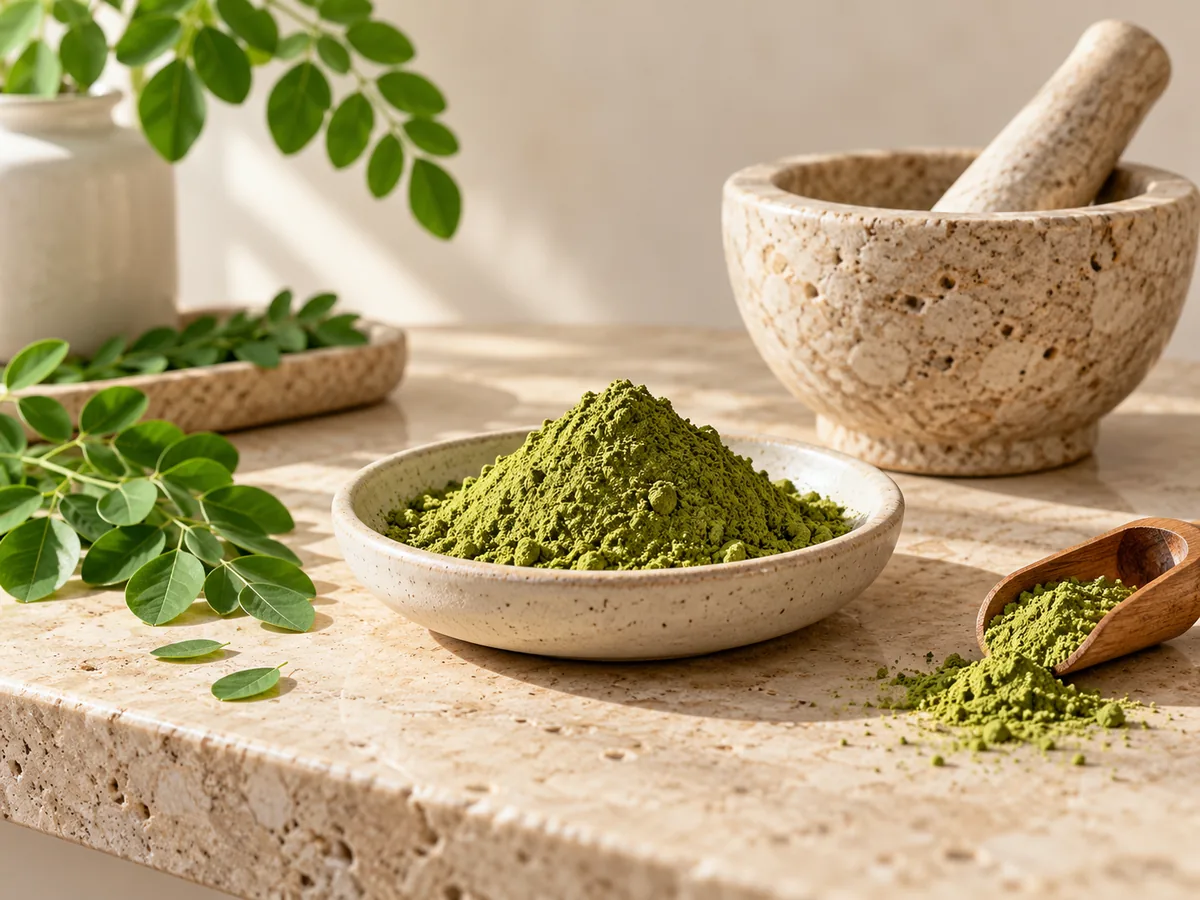
Yes. Moringa leaf powder is the dried leaf, ground whole. An extract uses a solvent to pull selected compounds out of the plant, so it holds a different mix. WebMD lists liquid extracts, tablets, capsules, and dried ground powder as separate forms.
The 2021 paper shows the difference in practice. Its researchers started with dried, ground leaf, then prepared methanol and acetone extracts, with reported extraction yields of about 6 to 7 percent. The methanol extract held more phenolic compounds and showed stronger antioxidant activity than the acetone one. All of that work happened in cell cultures, not in people.
So research on an extract does not automatically describe a spoonful of leaf powder in a smoothie, and the reverse is true too. Mivoro’s Premium Moringa Powder is leaf powder: 100 percent moringa leaf, nothing added. Our summary of moringa powder research explains how modest the evidence for any form still is.
How Do You Tell a Fresh Moringa Powder From a Stale One?
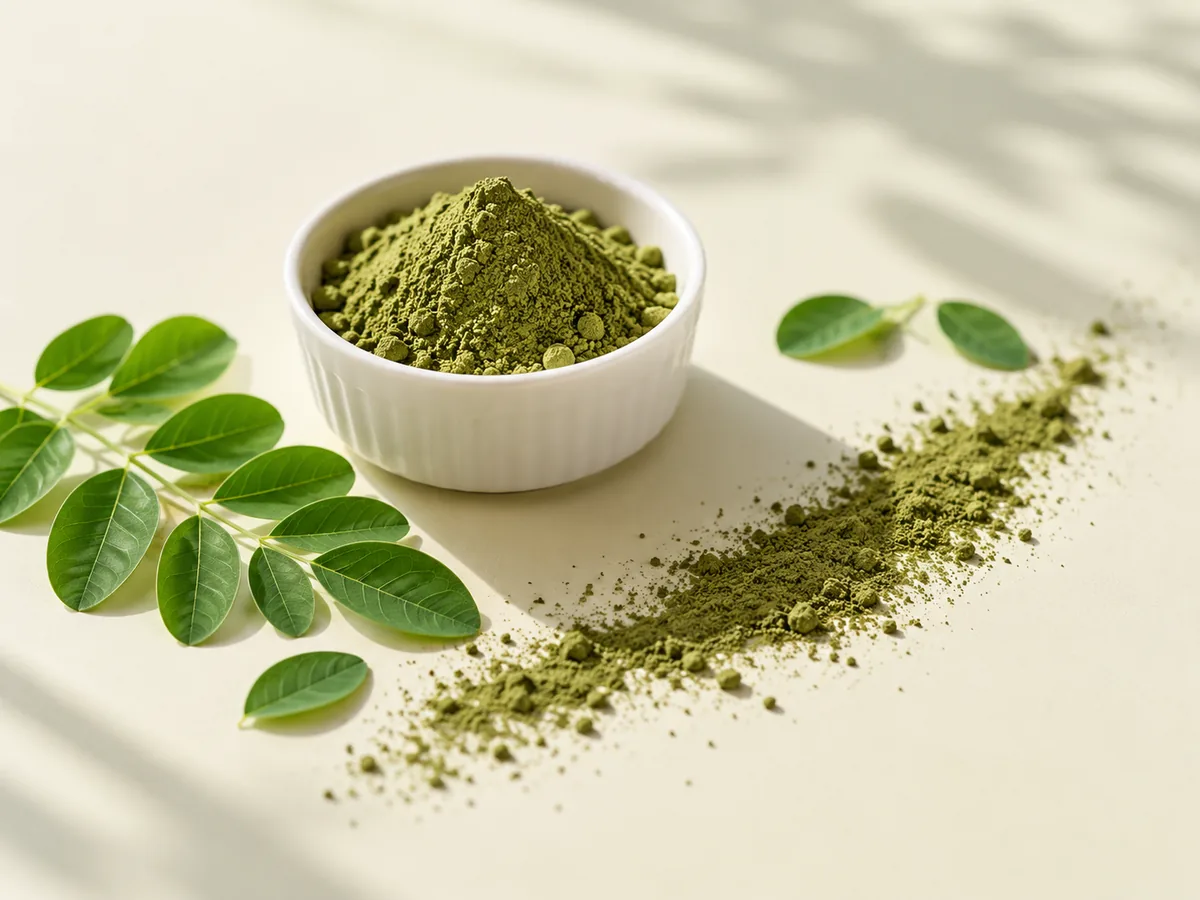
Open the bag and look first. Fresh powder is a lively green and smells mild, green, and grassy. Stale powder turns dull, olive, or brownish and smells flat, dusty, or musty. Clumps suggest that moisture got in. These are practical signs, not lab tests.
Storage science backs the color clue. A 12 month study stored moringa powder at 4, 25, and 40 degrees Celsius, in clear and opaque bags (Ndhlala and colleagues, Molecules). Lightness changed most in the warmest, clear bags, and the authors tie the shift to chlorophyll breaking down under light and heat. The best results came from cold storage in opaque packaging.
At home, a cool, dark cupboard and an airtight container are a sensible version of that. Mivoro’s product page recommends an airtight container in a cool, dry place away from sunlight. Use a dry spoon every time, because moisture is the other enemy. When you buy, an opaque pack is a better sign than a clear one, and the pack should show a date.
Frequently Asked Questions
What makes one moringa powder better than another?
Purity, plant part, drying, milling, and storage all count. A good one lists leaf only, names its origin, looks bright green, and smells fresh. An honest seller will also tell you what they have not tested.
Why do moringa powders vary so much in color and smell?
Growing conditions, harvest timing, drying method, and age all change the leaf. Light and heat during storage can fade the green and flatten the smell. Some variation between good products is normal.
Is leaf powder the same as an extract?
No. Leaf powder is the whole dried leaf, ground. An extract is a solvent concentrate with a different mix of compounds. Check the label to see which one you are buying.
Where is your moringa sourced and how is it dried?
Mivoro’s Premium Moringa Powder comes from Sri Lanka. The page describes fully dried, crushed, finely milled leaf with nothing added. We have not published the exact drying method, so we do not name one.
How long does it keep, and how is it packaged?
It comes in 50g and 100g sizes. We have not published a shelf life, so check the pack for a date. Keep it airtight, cool, dry, and out of sunlight, and scoop with a dry spoon.
A Note on Sourcing
Mivoro’s Premium Moringa Powder is 100 percent moringa leaf with nothing added, grown and processed in Sri Lanka. You can browse the full range in the Mivoro shop. It does not carry organic certification, and Mivoro does not currently publish third party lab results. This article summarizes published sources and makes no health claims about any Mivoro product.
This article shares general nutrition information, not medical advice. It does not diagnose, treat, cure, or prevent any disease. WebMD notes that moringa may cause allergic reactions, and that its effects in pregnancy and breastfeeding remain unknown. Talk to a healthcare provider before adding moringa to your routine, especially if you are pregnant, nursing, managing a health condition, or taking medication.