Moringa leaf powder comes from drying and grinding Moringa oleifera leaf. A good one comes down to three things. It contains pure leaf with nothing added. It smells and tastes fresh rather than stale. The seller tells you plainly what they have and have not tested. Price alone does not tell you much.
By Carl J., Owner, Mivoro · Last updated 23 September 2026
How Much Does Moringa Leaf Powder Cost?
Pricing generally runs a few dollars per ounce. Brand, packaging, and organic certification all affect the price. Mivoro’s Premium Moringa Powder, for example, costs $7.99 for a 50g pouch and $13.99 for 100g. At a serving size of 2 teaspoons, about 4g, that works out to around sixty cents a serving. Most single-ingredient moringa powders in the US market cost about the same.
What Does Moringa Leaf Powder Taste Like?
Moringa leaf powder has a mild, earthy, green flavor. It tastes closer to matcha or ground spinach than to a strong herbal taste. It is not bitter the way some green powders are. Quality and freshness both affect this, though. An older or poorly dried batch can taste flat, grassy, or slightly hay like rather than bright and green.
How Do You Use Moringa Powder Day-to-Day?
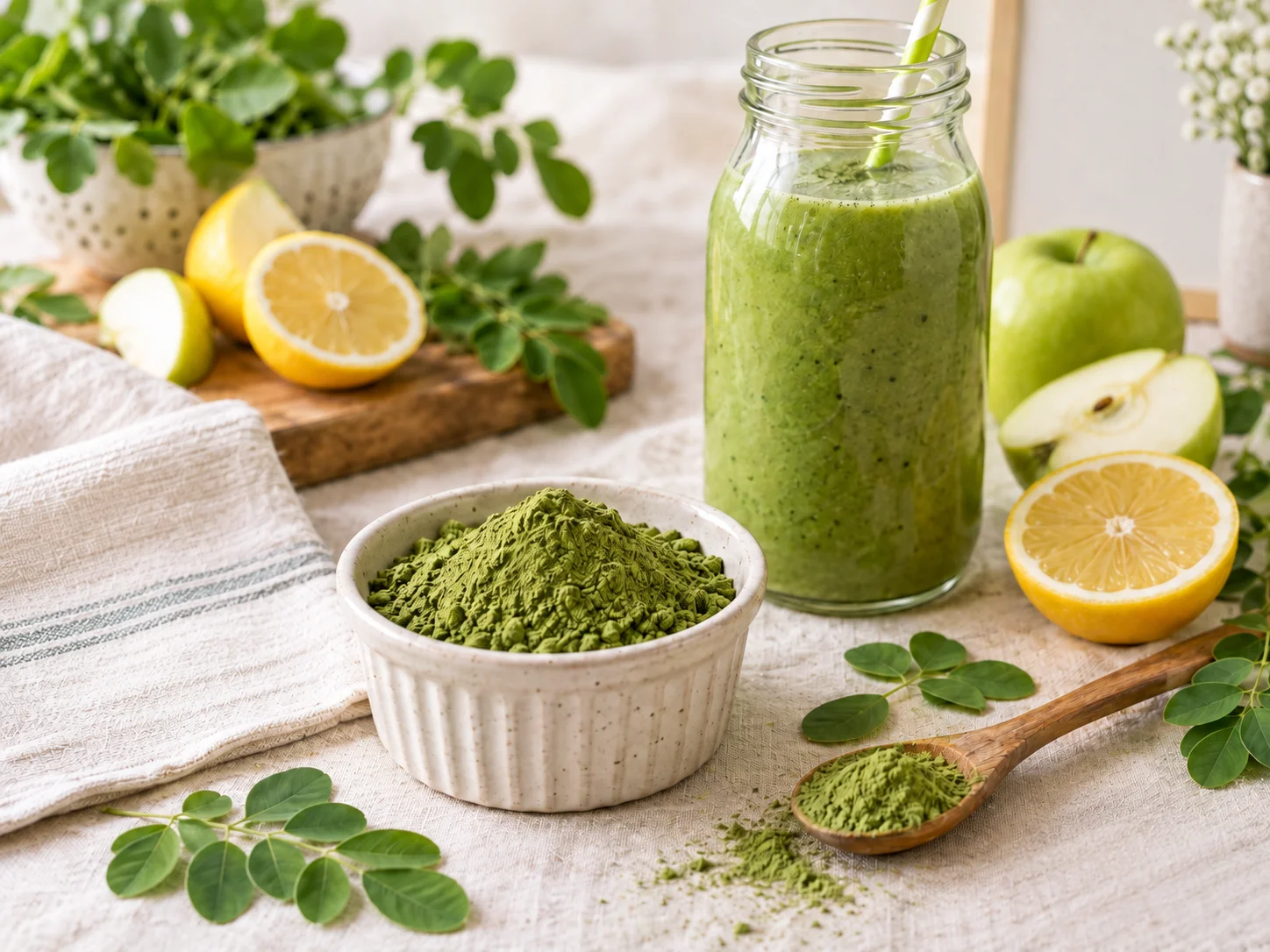
Most people blend a spoonful of moringa powder into a smoothie or shake. Its mild flavor disappears easily into fruit and yogurt. It also stirs easily into juice, water, or tea. You can sprinkle it over oats or yogurt, or mix it into soups, sauces, and dressings. Most people start with about half a teaspoon to one teaspoon a day. They increase the amount gradually as they get used to the taste and see how they tolerate it, rather than jumping straight to a full serving. For more on what the research actually shows about moringa’s nutritional benefits and typical daily amounts, see our full moringa powder benefits guide.
What Should You Look For in a Quality Moringa Powder?
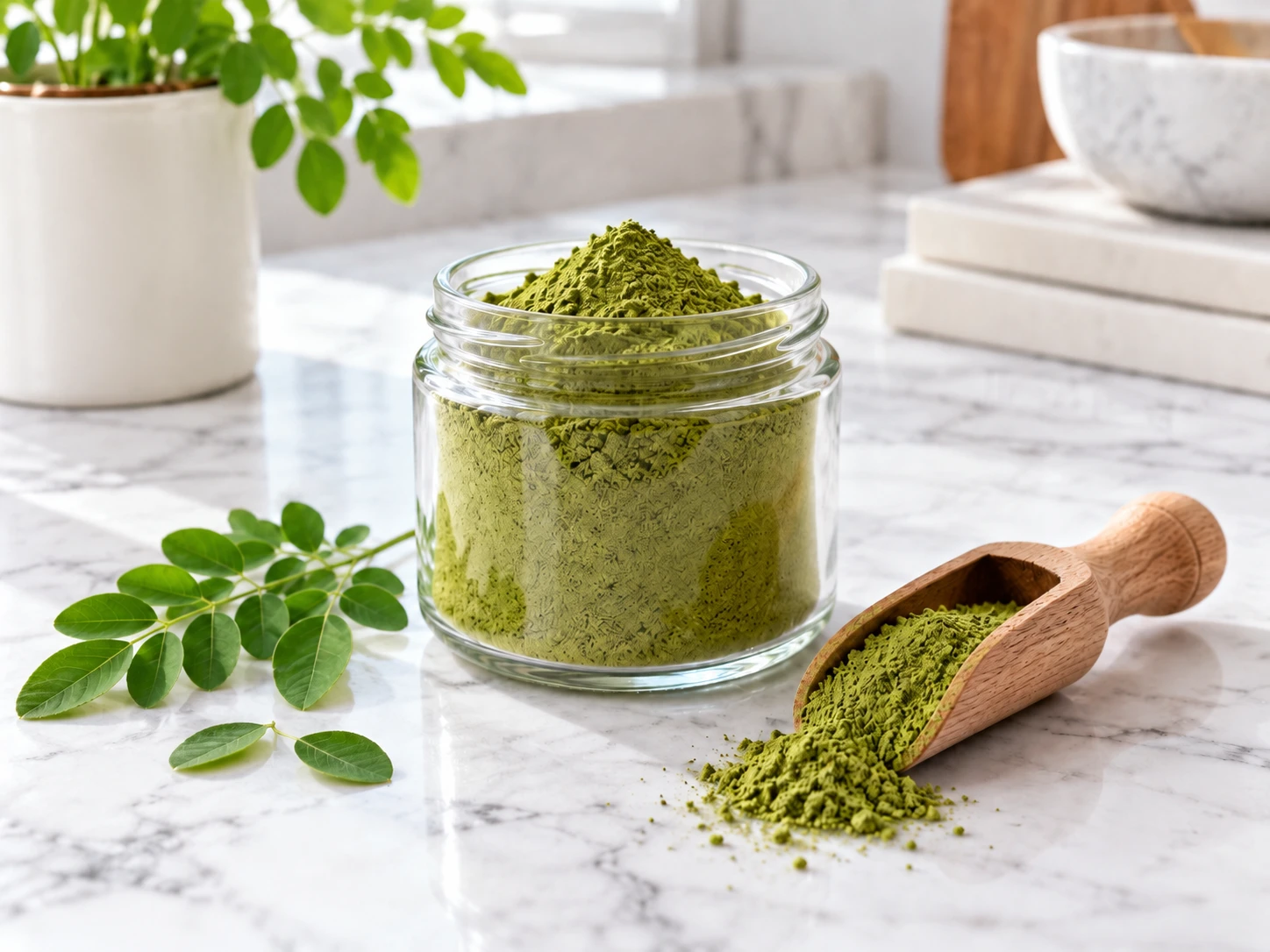
Quality in moringa leaf powder mostly comes down to what is not in the bag. Look for pure Moringa oleifera leaf powder with no fillers, added colors, or blended ingredients. Moringa costs little enough as a raw ingredient that there is little reason to cut it with anything else. Color is a real signal too. A vibrant, bright green powder generally points to careful drying and recent processing. A dull olive or brownish powder often signals heat damage during drying, or a batch that has sat on a shelf too long. A fine, smooth texture, rather than a coarse or gritty one, usually points to careful milling.
Mivoro dries its version in the shade rather than with heat, a lower temperature approach some producers use to protect more of the leaf’s natural color and nutrients. Research on moringa leaf drying methods generally supports the underlying idea. Higher heat drying measurably reduces chlorophyll and other nutrients compared to gentler, lower temperature methods (ScienceDirect study on drying methods and moringa leaf powder quality). No one has independently tested how much of a practical difference this makes on this specific product, though.
Is Organic Moringa Leaf Powder Worth Seeking Out?
Organic certification means a third party has confirmed that farmers grew the crop without synthetic pesticides or fertilizers. It can be worth paying more for if that matters to you. To be transparent, Mivoro’s Premium Moringa Powder does not currently carry organic certification. What it is: 100 percent moringa leaf with no additives, vegan, and gluten free, grown and processed in Sri Lanka. If certified organic is a requirement for you rather than a preference, check the packaging or listing for an actual USDA Organic seal or an equivalent certifier’s mark. Remember, “natural” or “pure” on a label is not the same thing as certified organic.
Which Moringa Leaf Powder Is Best, and Where Should You Buy It?
There is no single best moringa leaf powder. The right one depends on whether you care most about organic certification, price, taste, or where the tree grows. Buy from a seller who tells you plainly what they have and have not verified about their product. Look for one that lists real ingredients and gives you a clear country of origin, rather than one that leans on vague superlatives. Buying directly from the brand’s own site also reduces the odds of getting old or mislabeled stock, compared with an unverified third-party marketplace listing.
Frequently Asked Questions
How much does moringa leaf powder cost?
Mivoro’s Premium Moringa Powder costs $7.99 for 50g and $13.99 for 100g. That works out to roughly sixty cents per 2 teaspoon serving. Pricing on other brands generally falls in a similar range, with organic certified versions often costing more.
How do you use moringa powder day to day?
Most people blend a spoonful into a smoothie, stir it into juice or tea, or sprinkle it over oats or yogurt. A common starting point is about half a teaspoon to one teaspoon a day. Increase gradually rather than jumping straight to a full serving.
What should I look for in a quality moringa powder?
Look for pure moringa leaf with no fillers or additives. Check for a vibrant green color rather than dull olive or brown, and a fine, smooth texture instead of a coarse, gritty one. A clear country of origin and an honest label matter more than marketing language like “premium” or “pure” on their own.
Is your moringa powder tested for purity?
Right now, Mivoro does not have a published third-party Certificate of Analysis or lab test result for the Premium Moringa Powder. We would rather say that plainly than imply otherwise. Here is what we can confirm from the label: 100 percent moringa leaf, no additives or fillers, vegan, and gluten-free. If third-party lab testing matters to you, it is a fair question to ask any moringa seller, including us.
How should moringa powder be stored and how long does it keep?
Keep moringa powder in an airtight container, out of direct sunlight, in a cool, dry place. Always scoop with a dry spoon to keep moisture out. Stored this way, moringa leaf powder generally keeps well for around 12 to 24 months unopened. It stays good for many months after opening too, though color and flavor are usually best within the first year.
A Note on Sourcing
Mivoro mills its Premium Moringa Powder from Moringa oleifera leaves grown in Sri Lanka, with nothing added and no fillers. It does not currently carry organic certification, and no independent lab has tested it. We will update this page if that changes.