
Ceylon cinnamon authenticity starts with the species. Authentic Ceylon comes from Cinnamomum verum and has thin, tan-brown bark rolled into soft layers. It snaps easily and smells mild and sweet. Cassia looks darker and thicker and smells sharper. You can check sticks with your eyes, but for powder, the label and the seller’s proof matter more.
By Carl J., Owner, Mivoro · Last updated 15 October 2026
How Do You Tell Real Ceylon Cinnamon From Cassia?
Read the label first. Real Ceylon cinnamon carries the name Ceylon, true cinnamon, Cinnamomum verum, or zeylanicum, ideally with Sri Lanka as the origin. A jar that says only “cinnamon” gives you no proof either way.
Tasting Table says labels with “Ceylon,” “true,” or “Zeylanicum” point to true cinnamon. Labels with “cassia,” “Chinese cinnamon,” or “Saigon cinnamon” point to cassia (Tasting Table’s guide to spotting fake cinnamon). WebMD adds that both types are simply sold as “cinnamon” in the United States (WebMD’s Ceylon cinnamon overview). So the words on the pack are your first and best clue.
Appearance comes second, and it works best on whole sticks. Aroma and taste come third. The next section covers each one.
What Does Authentic Ceylon Cinnamon Look Like?
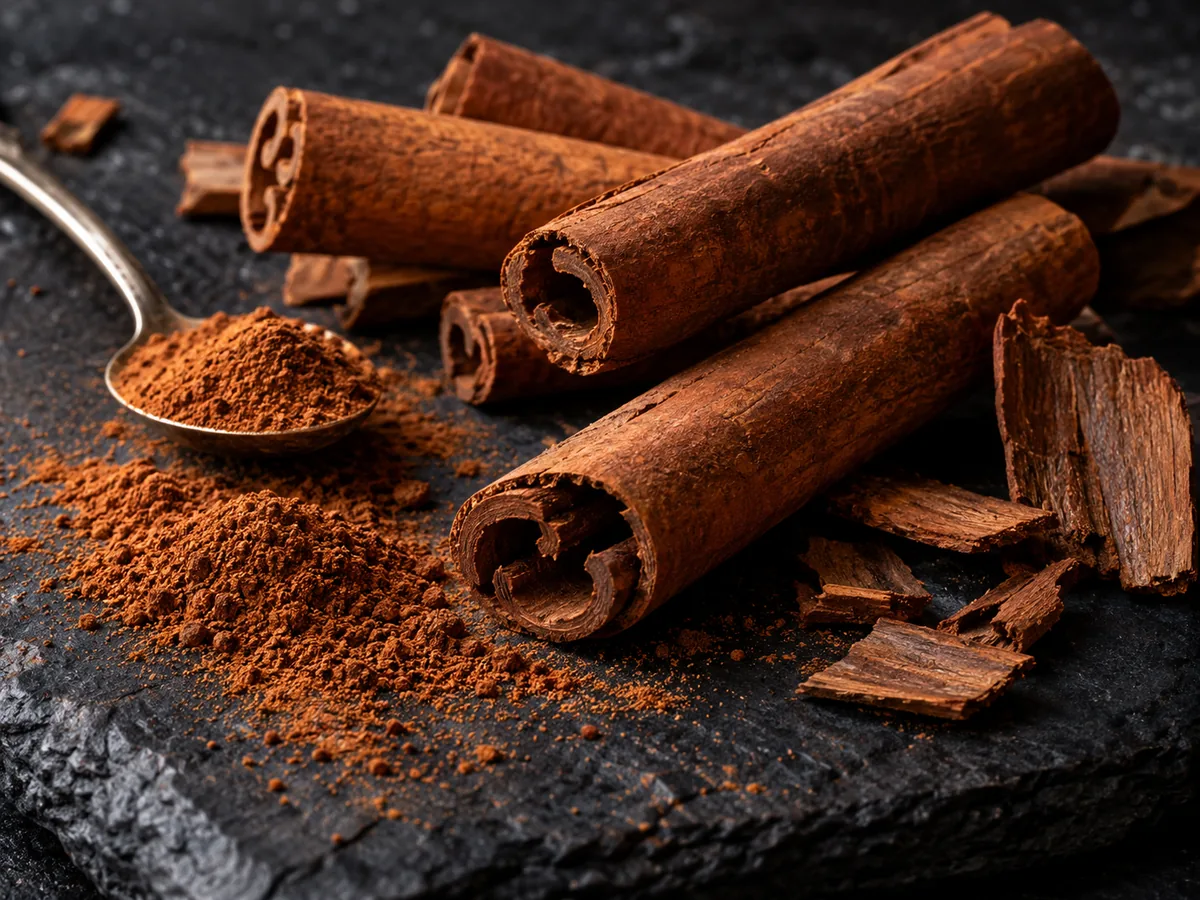
Authentic Ceylon sticks are tan brown and made of many thin, soft layers rolled tightly together, much like a cigar. They are brittle and snap with little effort. Cassia sticks are darker reddish brown, thicker, and rougher to the touch.
Three sources describe the same pattern. AGES, Austria’s food safety agency, says Ceylon sticks have much thinner leaves, similar to a cigar (AGES on coumarin in cinnamon). Healthline describes Ceylon as tan brown with many tight sticks and soft layers, and cassia as dark brown red with thicker, rougher sticks (Healthline’s Ceylon versus cassia comparison). Tasting Table adds that cassia quills can be almost twice as thick.
Smell and taste help too. Healthline calls Ceylon delicate and mildly sweet, and cassia strong and spicy. WebMD says Ceylon is more delicate and less pungent. If the aroma hits you in the face, Tasting Table says, you are probably holding cassia.
Powder is harder to judge. Tasting Table says ground true cinnamon has an almost yellowish tone, while ground cassia heads toward reddish brown. Color is a weaker clue than it sounds, because you rarely have the other cinnamon beside yours for comparison. For ground spice, AGES advises checking the imprint on the package instead. In our view, no kitchen test can prove where a cinnamon grew or how much coumarin it holds.
Is All Cinnamon the Same?
No. Two different kinds of tree give two different spices under one name. Ceylon comes from Cinnamomum verum, grown mainly in Sri Lanka. Cassia comes from Cinnamomum cassia and its relatives. They share a flavor family but differ in strength and in coumarin.
Coumarin is a natural compound in cinnamon bark. WebMD says some types of cassia are high in coumarin, Ceylon has much less, and coumarin can harm the liver in large amounts. AGES measured 1,880 to 3,260 mg per kg in cassia and no more than 185 mg per kg in Ceylon. Healthline cites about 1 percent in cassia against 0.004 percent in Ceylon. Figures vary by sample, but they point the same way.
The European daily limit is 0.1 mg of coumarin per kg of body weight. AGES says that means 6 mg a day for a 60 kg adult. By our arithmetic, 6 mg sits in roughly 1.8 to 3.2 grams of cassia at AGES’s measured levels, but in about 32 grams of the highest Ceylon sample. Our guide to the Ceylon and cassia coumarin difference goes deeper.
Is the Cinnamon in US Supermarkets Real Cinnamon?
Yes, it is real cinnamon, but it is usually cassia rather than Ceylon. Healthline says almost all cinnamon in supermarkets is the cassia variety. Many jars say only “cinnamon,” so the label rarely tells you which one you bought.
Tasting Table says the FDA does not distinguish between Ceylon, Saigon, and Chinese cinnamon. WebMD says you may need a specialty spice shop to be sure of getting Ceylon. Healthline notes that cassia is very cheap, while Ceylon is quite expensive by comparison. A bargain price on a jar claiming to be Ceylon deserves a second look, though price alone is a hint, not proof.
Which brands actually sell real Ceylon cinnamon? We will not rank other companies. Judge any brand by what it puts in writing: the species name, the country of origin, a one ingredient list, and ideally test results. Our Ceylon and cassia cinnamon powder guide applies the same checks to the ground form.
What Should a Seller Be Able to Prove About Origin?
Ask what the label and listing actually prove. For Ceylon cinnamon authenticity, a trustworthy seller names the species, the country of origin, and the full ingredient list, and answers plainly when you ask for lab results. Words like premium, pure, or natural prove nothing on their own.
Start with the pack and the product page. Both should say Ceylon or Cinnamomum verum, name Sri Lanka or another country, and list cinnamon as the only ingredient. Then ask for a certificate of analysis. A lab report is the only thing that can back a coumarin claim. Testing matters for other reasons too. WebMD notes that some cinnamon products, including ground cinnamon, may contain high levels of lead.
Mivoro’s product pages call our Ceylon cinnamon “naturally low in coumarin.” We do not currently publish third party lab results, so we cannot hand you a report. We would rather say so plainly. What we can point to is the species, the origin, and the ingredient list on each page, and you can fairly ask us the same questions you would ask anyone else.
Frequently Asked Questions
How do you tell Ceylon cinnamon from cassia at home?
Check the label for Ceylon or Cinnamomum verum. Then look at sticks: Ceylon is pale tan brown, thin, layered, and easy to snap, while cassia is dark, thick, and hard. Powder is much harder to judge by eye.
Why is most supermarket cinnamon not true cinnamon?
Cassia is cheaper and far more commonly consumed, and the FDA does not separate the types, so jars usually say only “cinnamon.” It is real cinnamon, just not the true Ceylon kind.
What is coumarin and why does it differ between the two?
It is a naturally occurring bark compound, and the two species simply carry different amounts, with cassia much higher. Europe’s daily limit is 0.1 mg per kg of body weight.
Does Ceylon cinnamon taste noticeably different?
Yes. Healthline describes Ceylon as delicate and mildly sweet, and cassia as strong and spicy. Healthline says Ceylon’s mild flavor suits desserts.
How do you check a seller’s origin claims?
Look for the species name, a named country, and a one ingredient list. Next, request a lab certificate. If a seller will not share test results, treat the origin claim as unverified.
A Note on Sourcing
Mivoro’s Ceylon Cinnamon Sticks and Ceylon Cinnamon Powder are 100 percent Ceylon cinnamon, Cinnamomum verum, packed in Sri Lanka, with nothing added, according to their product pages. You can see them alongside the rest of the range in the Mivoro cinnamon collection. We do not currently publish certifications or third party lab results for either product. This article summarizes published sources and makes no health claims about any Mivoro product.
This article shares general nutrition information, not medical advice. It does not diagnose, treat, cure, or prevent any disease. Talk to a healthcare provider before adding cinnamon to your routine, especially if you have a liver condition, are pregnant, nursing, or taking medication.