
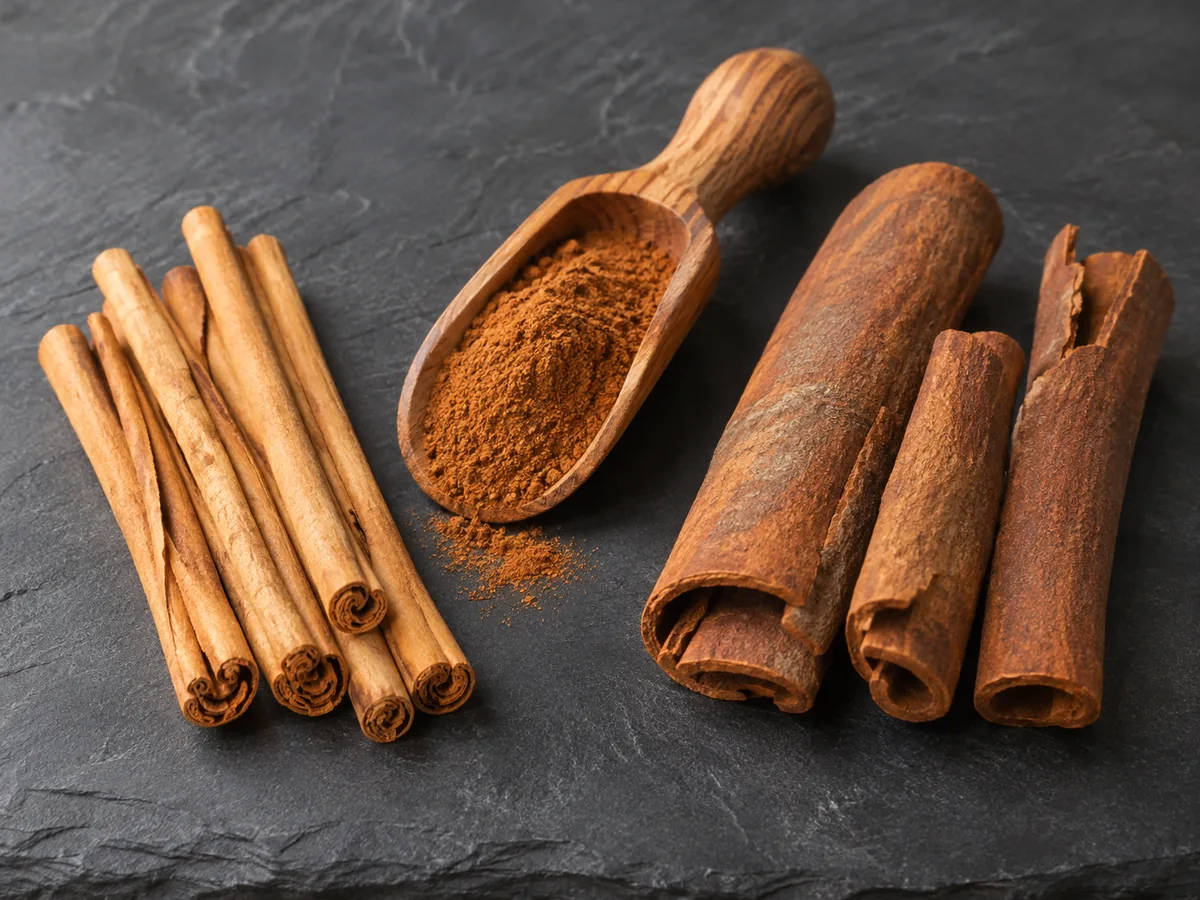
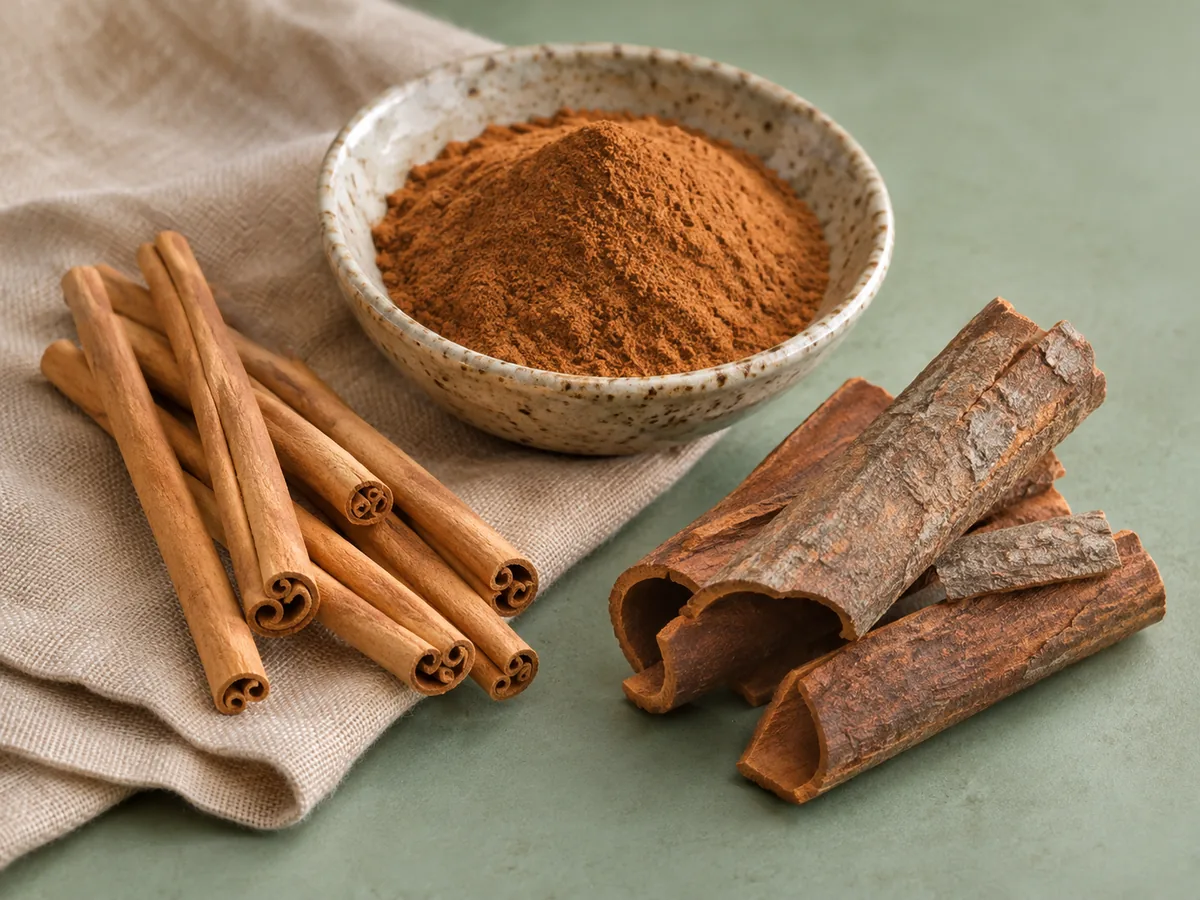
Cinnamon quills vs cassia bark comes down to how thin and layered the stick is. Ceylon quills are soft, tightly rolled, and tan, while cassia bark is thick, hard, and dark. This guide covers how they differ, whether to buy sticks or ground, and how long each keeps.
By Carl J., Owner, Mivoro · Last updated 11 November 2026
What Is the Difference Between Cinnamon Quills and Cassia Bark?
They come from different trees. Ceylon cinnamon is native to Sri Lanka and southern India. Cassia is the type most people have in the pantry. Healthline calls cassia very cheap and the most commonly consumed type, and Ceylon quite expensive (Healthline on Ceylon vs cassia cinnamon).
The taste differs too. Healthline describes cassia as strong and spicy, and Ceylon as delicate and mildly sweet. A quill is the rolled inner bark of the Ceylon tree. Our guide to Ceylon vs cassia cinnamon goes deeper on the two species.
How Is a Ceylon Quill Made?
By peeling and layering, all by hand. Sri Lanka’s Export Development Board says peelers scrape the outer bark off young stems and rub the inner bark with a brass rod. Two parallel cuts then free it. The thin strips slide inside one another and overlap end to end to form a quill. The quills dry indoors on racks for four to seven days, then get cut to length (Export Development Board on processing Ceylon cinnamon).
In our reading, that layering explains the look. A quill is many thin strips of bark rolled together, not one thick piece.
Should You Buy Cinnamon Sticks or Ground?
Buy sticks when you want to inspect what you are paying for, and ground when convenience matters more. With a whole stick, you can see the color, layers, and thickness before you buy. Once it is ground, those clues are gone. You rely on the label and the seller. The Spice House says ground Ceylon is fine and powdery. Ground cassia is coarser and slightly gritty, which is a hint at best (The Spice House on Ceylon vs cassia cinnamon).
Mivoro sells both forms. Our Ceylon cinnamon sticks come in 50g, 100g, and 500g packs, and our Ceylon cinnamon powder comes in 50g and 100g. Our powder or sticks guide compares the two for everyday cooking.
Do Cinnamon Sticks Last Longer Than Powder?
Yes, by a wide margin. The Spice House says whole spices keep for up to three years, with potency dropping after about 18 months. Ground spices hold their best flavor for up to a year and start to change after six months (The Spice House on spice freshness). Spices Inc is more cautious. It gives whole spices one to two years and ground spices one year (Spices Inc on shelf life). Both agree that whole outlasts ground. These are retailer estimates, not lab tests.
What Can the Bark Tell You, and What Can’t It?
It can confirm species and little else. Sticks show whether you are holding Ceylon or cassia. They cannot show how fresh the batch is, which grade it is, or whether anyone tested it. Ground cinnamon hides even the species. Our guide to checking Ceylon cinnamon authenticity covers what a buyer can verify.
Frequently Asked Questions
Quills or hard bark: how do you tell them apart by eye?
Check four things. Healthline describes Ceylon as tan brown and cassia as dark red brown. Ceylon is many soft layers rolled tight. The Spice House describes cassia as a single curled layer, like a hollow tube. Cassia is also thicker and rougher to the touch. Our own tip is to look at a cut end, where a spiral of layers or a single curl shows clearly.
Sticks or ground: which keeps its flavor longer?
Sticks. In our reasoning, a whole stick exposes little surface to air. A powder exposes a great deal, so its aroma escapes faster. Keep either form in an airtight container in a cool, dark cupboard, away from the stove. Choose a small pack of ground cinnamon that you will finish within months. Save the sticks for the long haul. Our product pages give the same storage advice: an airtight container, a cool, dry place, and no direct sunlight.
Can Ceylon quills be ground at home, and is it worth it?
Yes. The Spice House calls Ceylon softer than cassia and easier to grind. Its product page says the quills snap apart with your fingers. It also suggests buying whole spices and grinding as needed. Our tip: break the quills into short pieces, use a spice grinder, and sift out any stringy bits. It is worth the effort when you want the freshest aroma for a recipe. If you bake rarely, a small pack of ready ground powder saves the work.
Which form suits simmering, and which suits baking?
Sticks suit simmering, because they release flavor slowly into liquid and lift out in one piece. Think syrups, poached fruit, mulled drinks, and rice. Ground cinnamon suits baking, since it mixes evenly into batter and dough. No source we found rates forms by use, so this is our view.
Why do Ceylon quills crumble when cassia bark does not?
Structure explains it. The Spice House calls Ceylon sticks soft, papery, and fragile, and cassia hard and woody. Thin rolled layers flake and snap easily, while a thick single layer resists. We found no source that explains it further, so the link to structure is our reading. A quill that flakes in your hand is behaving the way Ceylon does.
A Note on Sourcing
You can browse the full range in the Mivoro shop. This guide draws on published sources and our own product pages, and it makes no health claims about any Mivoro product. Shelf life figures are retailer estimates, and pack sizes match our listings in November 2026.
This article shares general buying information, not medical advice.