
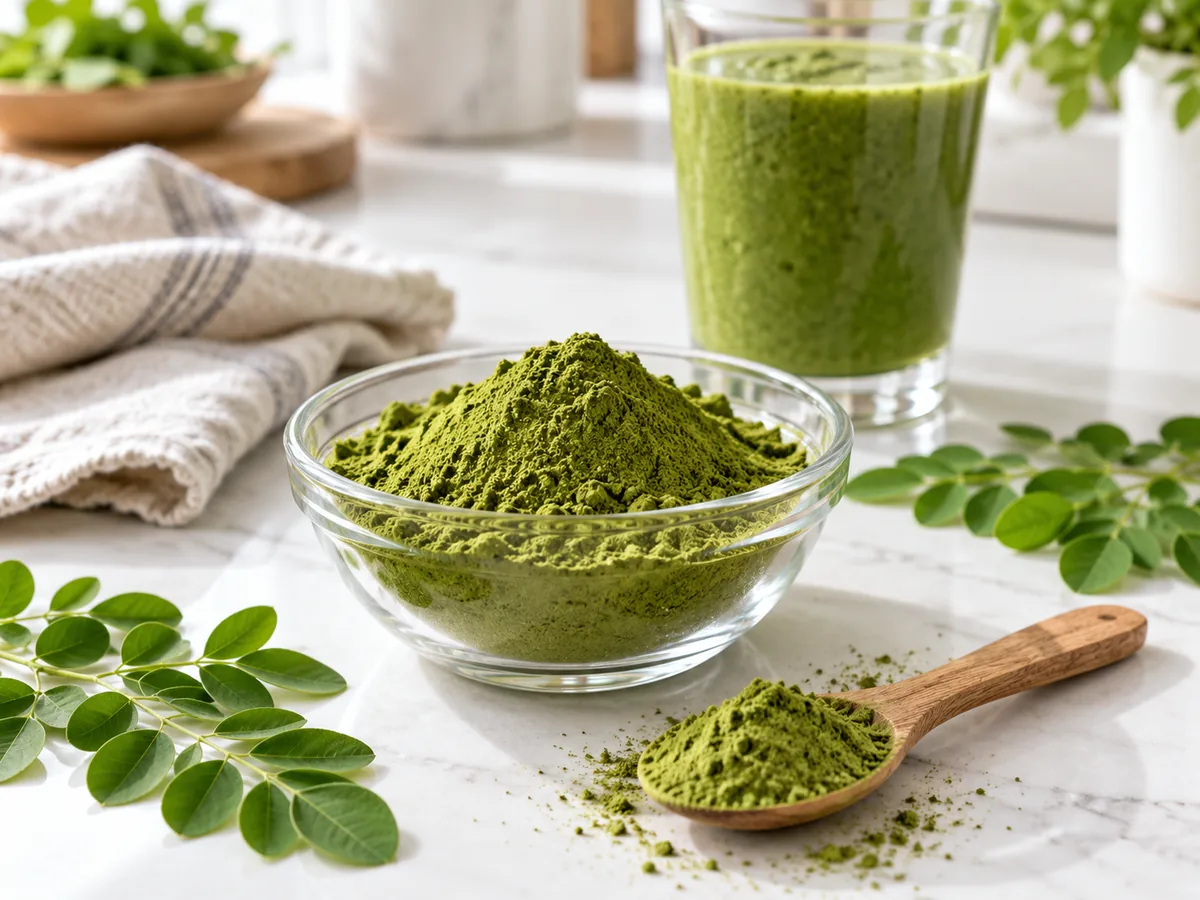
To use moringa powder, stir a small amount into a smoothie, juice, oatmeal, soup, or tea. Beginners can start small, with half a teaspoon, and work up toward the one to two teaspoons that Northwestern Medicine says many people take daily. The taste is mild, earthy, and a little bitter, and it blends away easily into fruit.
By Carl J., Owner, Mivoro · Last updated 13 October 2026
How Do You Take Moringa Powder?
Most people mix moringa powder into food or drink. Stir it into a smoothie, juice, or yogurt, sprinkle it over oatmeal, or whisk it into soup, sauce, or tea. Northwestern Medicine lists the same options and advises starting with small amounts (Northwestern Medicine’s guide to using moringa safely).
If you are working out how to use moringa powder for the first time, a smoothie is the easiest step. The blender breaks up clumps, and the fruit covers the flavor. For a drink, whisk the powder into a splash of liquid first, then top it up. For oatmeal or yogurt, stir it in well. In soups and sauces, many cooks add it near the end so the color stays green.
Stick to the leaf powder. Cleveland Clinic says the leaves and pods are the parts to eat, and that the roots, bark, and flowers are not safe to eat. Cooks across South and Southeast Asia have long used the leaves and pods in everyday food.
How Much Moringa Powder Should a Beginner Use?
No official daily amount exists. Northwestern Medicine says many people take 1 to 2 teaspoons a day and advises starting low, then increasing gradually. A half teaspoon is a cautious first step for a beginner. Follow the product label, and avoid large amounts at once.
That half teaspoon is our suggestion, not a medical dose. Cleveland Clinic gives no dose either. It says the aim is to eat moringa as a regular part of a balanced diet. That does not mean downing cup after cup (Cleveland Clinic’s introduction to moringa). It also warns that too much fiber rich green can cause cramps, gas, or nausea.
A simple plan is half a teaspoon a day for a week. If your stomach feels fine, move up to one teaspoon. Northwestern Medicine’s figure tops out at two teaspoons, so there is little reason to go past that range. Our summary of moringa powder research explains why we keep expectations modest.
Some people should check first. Northwestern Medicine says to talk to a doctor if you take blood pressure or diabetes medication, or blood thinners. The same goes if you are pregnant, breastfeeding, or managing a chronic condition. It notes that moringa may affect blood sugar and blood pressure. Cleveland Clinic adds statins, thyroid medication, and drugs processed by the liver to that list. WebMD also advises talking to a healthcare provider before trying it as a supplement (WebMD’s moringa powder overview).
What Does Moringa Powder Taste Like?
Moringa powder tastes mild, earthy, and slightly bitter. Northwestern Medicine compares it to arugula or spinach with a hint of grass, and Cleveland Clinic compares the powder to matcha. Mivoro describes its own as a mild, earthy, green flavor. The taste is gentle in small amounts and stronger as you add more.
Freshness matters too. A stale or poorly dried batch can taste flat or harsh, so a bag that smells fresh and green is a good sign. Our guide to choosing a moringa leaf powder covers what to look for.
How Do You Make Moringa Powder Taste Better?
Blend it with sweet, bright flavors, and use less than you think you need. Banana, mango, pineapple, and citrus all cover the earthy edge in a smoothie. Stir it into oatmeal or yogurt with a little fruit. Whisk it into a small splash of liquid first so it does not clump.
If a drink tastes harsh, the usual fix is less powder, not more sugar. Cut the amount in half and build back up slowly. Savory dishes work well too. Soups, sauces, and dressings already carry earthy flavors, so a pinch of moringa disappears into them.
Timing and Storage: What to Know Before You Open the Bag
None of the three sources compares taking moringa with food against taking it on an empty stomach. Northwestern Medicine lists nausea, diarrhea, and stomach discomfort among the possible side effects. Taking it with a meal, or blended into food, is the gentler way to start. That is common sense, not research. The best way to learn how to use moringa powder is to keep it simple and comfortable.
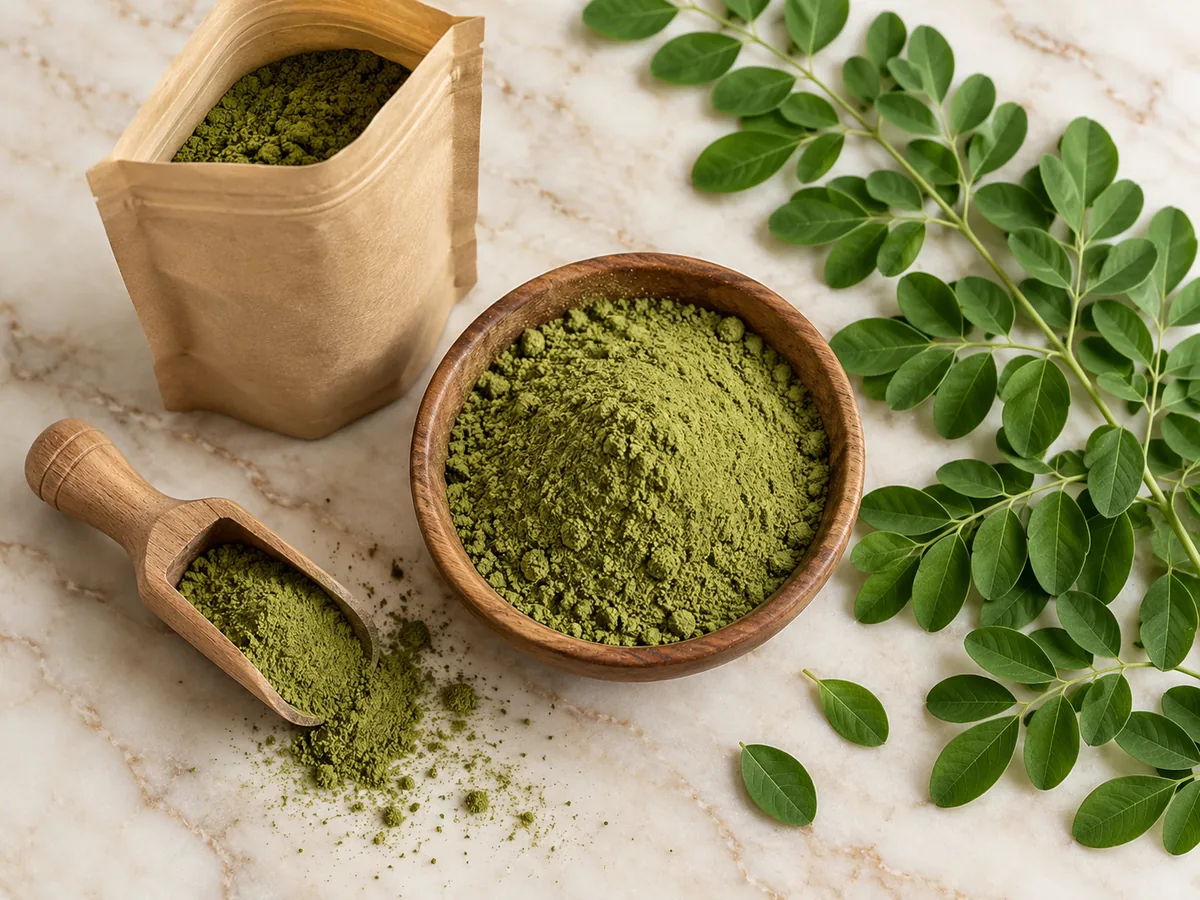
For storage, WebMD notes that moringa powder keeps for many months without refrigeration. Mivoro’s product page recommends an airtight container in a cool, dry place away from sunlight. After opening, reseal the bag tightly and use a dry spoon. Keep it away from the steam over your stove. If the powder smells musty or clumps from moisture, replace it.
Frequently Asked Questions
How do I actually take moringa powder?
Stir it into a smoothie, juice, yogurt, oatmeal, soup, or tea. Blending it with other flavors is the easiest way to start. According to Northwestern Medicine, leaf powder is the most studied form.
How much should I start with as a beginner?
Half a teaspoon is a cautious start, and there is no official dose. Northwestern Medicine says many people take 1 to 2 teaspoons a day. Increase gradually and follow the label.
What does it taste like, and how do I make it more palatable?
It tastes mild, earthy, and a little bitter, like a grassy spinach. Blend it with banana, mango, or citrus, and use less than you think you need. Whisk it into a splash of liquid first to prevent clumps.
Is it better taken with food or on an empty stomach?
No source compares the two. Because stomach upset is a listed side effect, taking it with food is the gentler way to start. Ask a provider if you have a health condition.
How should it be stored once opened?
Keep it in a tightly sealed container in a cool, dry place away from sunlight. Use a dry spoon, and replace it if it smells musty or clumps from moisture.
How are your powders processed and packaged?
Our moringa leaves go through full drying, crushing, and fine milling in Sri Lanka, with nothing added. Our Ceylon cinnamon powder is 100 percent Ceylon cinnamon from Sri Lanka. Both come in 50g and 100g pouches.
A Note on Sourcing
Mivoro’s Premium Moringa Powder is 100 percent moringa leaf with nothing added, grown and processed in Sri Lanka. You can browse the full range in the Mivoro shop. It is not certified organic, and Mivoro does not currently publish third party lab results. Northwestern Medicine notes that moringa can take up heavy metals from soil, so ask any seller what they have tested. This article summarizes published sources and makes no health claims about any Mivoro product.
This article shares general nutrition information, not medical advice. It does not diagnose, treat, cure, or prevent any disease. Talk to a healthcare provider before adding moringa to your routine, especially if you are pregnant, nursing, managing a health condition, or taking medication.