
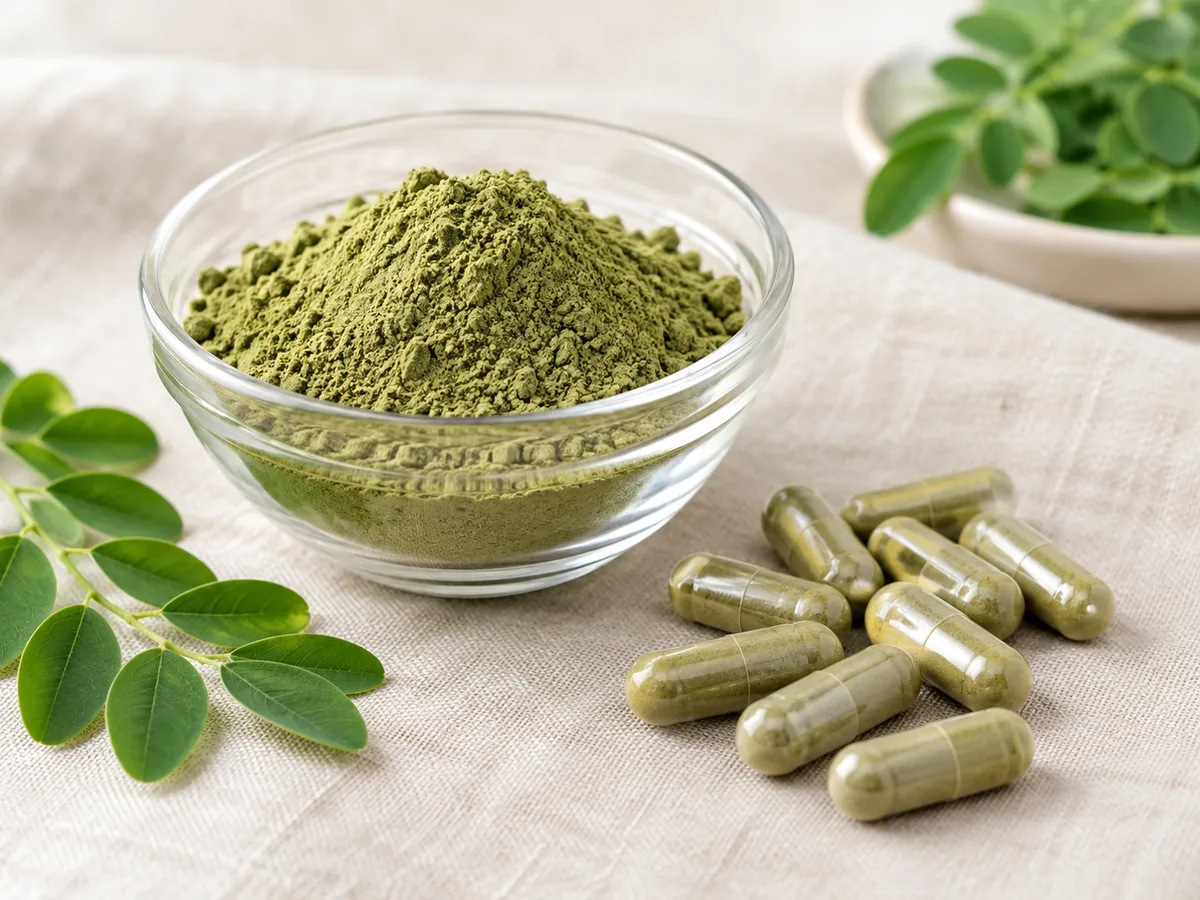
Moringa powder vs capsules comes down to how you want to use it. Powder is plain leaf that you can stir into food and adjust by the spoonful. Capsules hide the taste but fix the amount. Next to matcha, moringa tastes earthier and comes from a different plant.
By Carl J., Owner, Mivoro · Last updated 26 October 2026
Is Moringa Powder Better Than Capsules?
Neither form is better for everyone. They suit different habits. Northwestern Medicine lists powder as the most common form of moringa, made from dried leaves, with capsules, teas, and extracts as alternatives (Northwestern Medicine’s guide to moringa). It also says supplements are not regulated the way medications are, and that the FDA does not approve dietary supplements.
The first difference is what you are buying. Mivoro’s Premium Moringa Powder is 100 percent moringa leaf with nothing added. A capsule holds powder or extract inside a shell, so the label matters more. In our view, read the ingredient list for fillers and for whether it is leaf, extract, or something else.
The second difference is control. With powder, you choose the spoonful and can start small. A capsule fixes the amount per piece, which is simple if you want no taste and no measuring. Northwestern also warns that moringa products are not standardized and can vary in content and contaminants, especially heavy metals, because the plant accumulates them from soil. Its advice is to buy from reputable brands with clear labeling and third party purity testing, whichever form you choose.
Mivoro sells powder only, so we cannot speak to any capsule brand.
How Does Moringa Compare With Matcha?
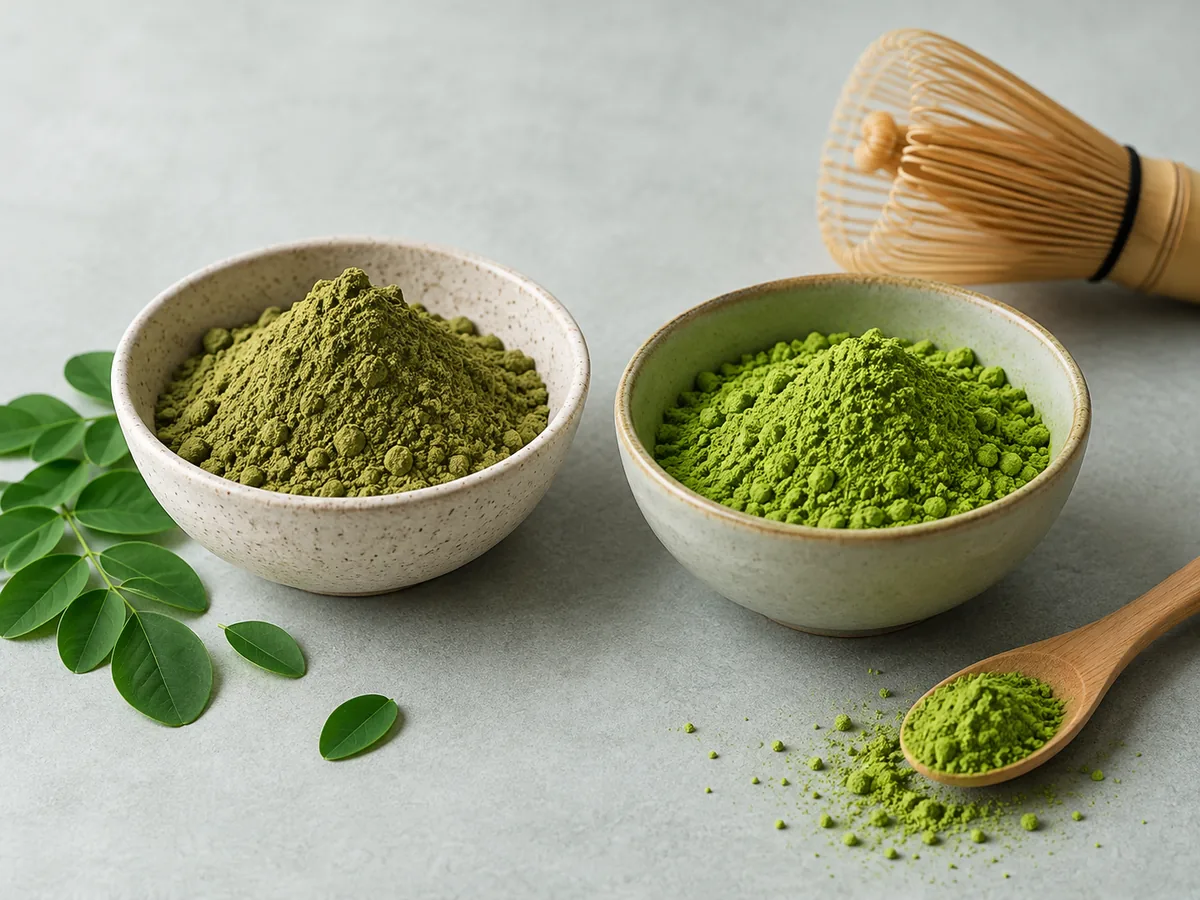
They look alike in the bowl, but they are different plants. Clemson University’s extension service says matcha comes from tencha, a Japanese green tea leaf grown in shade. Workers steam the leaves, strip the stems and veins, and grind them. Because you drink the whole leaf, the powder is bright green and tastes grassy and earthy with a slight bitterness (Clemson’s guide to matcha).
Moringa powder is ground leaf from the Moringa oleifera tree, which Cleveland Clinic says is native to South and Southeast Asia. It describes the powder as a bit grassier, like matcha (Cleveland Clinic’s introduction to moringa). Northwestern calls the taste mild, earthy, and slightly bitter, like arugula or spinach.
Use is where they part ways. Most people whisk matcha with hot water into a thin or thick tea, or make a latte. Clemson’s latte recipe uses 1 to 2 teaspoons with hot water and milk. You stir moringa into food, so it fits smoothies, oatmeal, soups, and sauces as well as drinks.
Wellbeing Nutrition, a supplement brand, puts matcha at about 35 mg of caffeine per serving and moringa at none. We cite it with care, because it is a promotional page. Moringa is not a tea plant, so check the label if caffeine matters to you.
Which Moringa Form Should a Beginner Buy?
Powder is the easier place to start, in our view, because you can taste it, measure it, and stop easily. Mivoro’s product page suggests blending a spoonful into smoothies and shakes, stirring it into juice or tea, adding it to soups, sauces, and dressings, or sprinkling it over oats and yogurt.
For daily cooking, powder is the only form that works. Add it late to hot dishes so the color stays green, and whisk it into a splash of liquid first to avoid clumps. Our beginner’s guide to using moringa powder covers amounts and taste fixes, and the moringa guide explains what the powder is.
A capsule makes sense if you dislike the flavor or want a routine with no kitchen step. Talk to a healthcare provider before starting any moringa supplement, especially if you take medication.
How Long Does Each Form Keep?
The sources we reviewed do not compare shelf life by form. WebMD says dried leaves ground into powder keep for many months without refrigeration, and gives no exact figure (WebMD’s moringa powder overview).
For powder, Mivoro’s page recommends an airtight container in a cool, dry place away from sunlight. Reseal it after each use and scoop with a dry spoon. For capsules, go by the expiry date printed on the bottle. In our view, a stale powder shows itself by a flat or musty smell, and our guide on choosing a quality moringa powder lists what to check.
Which Form Is Better Value by Weight?
Compare cost per gram, because bottle sizes mislead. Powder states its weight, so divide the price by the grams. For capsules, multiply the count by the milligrams per capsule to find the total weight. As an illustration, 60 capsules at 500 mg each hold 30 grams. Then divide the price by that total.
Mivoro’s powder is listed at $7.99 to $13.99 in October 2026, in 50g and 100g sizes. We have no capsule prices to compare, and prices change, so run the sum on any product you consider. Value also depends on use. A powder you stir into daily meals goes further than one you leave in the cupboard, so buy the size you will finish while it is fresh.
Frequently Asked Questions
Powder or capsules: what actually changes?
Powder is plain leaf you measure yourself and can cook with. A capsule is a fixed dose inside a shell, with no taste and no cooking use. Check the label for what else is inside a capsule.
How does moringa compare with matcha on taste and use?
Both are green and grassy with a slight bitterness. You whisk matcha into hot water or milk, and you stir moringa into food and drinks. Matcha comes from tea leaves, and moringa comes from a different tree.
Which form is easier to work into daily cooking?
Powder, because you can stir it into a smoothie, oatmeal, soup, or sauce. A capsule has no cooking use. Add powder late in a hot dish so the green color holds.
Does form affect how long it keeps?
WebMD says powder keeps for many months without refrigeration, but no source we found compares forms. With capsules, trust the printed date and keep the bottle dry.
Which is better value by weight?
Work out the price per gram for each. Powder lists its weight outright, while capsules need a sum of the count times the milligrams per capsule. Compare the totals, not the bottle sizes.
A Note on Sourcing
You can browse the full range in the Mivoro shop. For readers who want the research side, a 2023 open access review in the International Journal of Molecular Sciences surveys moringa’s chemistry, formulations, and toxicology (PMC review of Moringa oleifera). This guide summarizes published sources and our own product page, and it makes no health claims about any Mivoro product. Northwestern Medicine notes that moringa can take up heavy metals from soil, so ask any seller what they have tested.
This article shares general buying and cooking information, not medical advice. It does not diagnose, treat, cure, or prevent any disease. Talk to a healthcare provider before adding moringa to your routine, especially if you are pregnant, nursing, managing a health condition, or taking medication.