
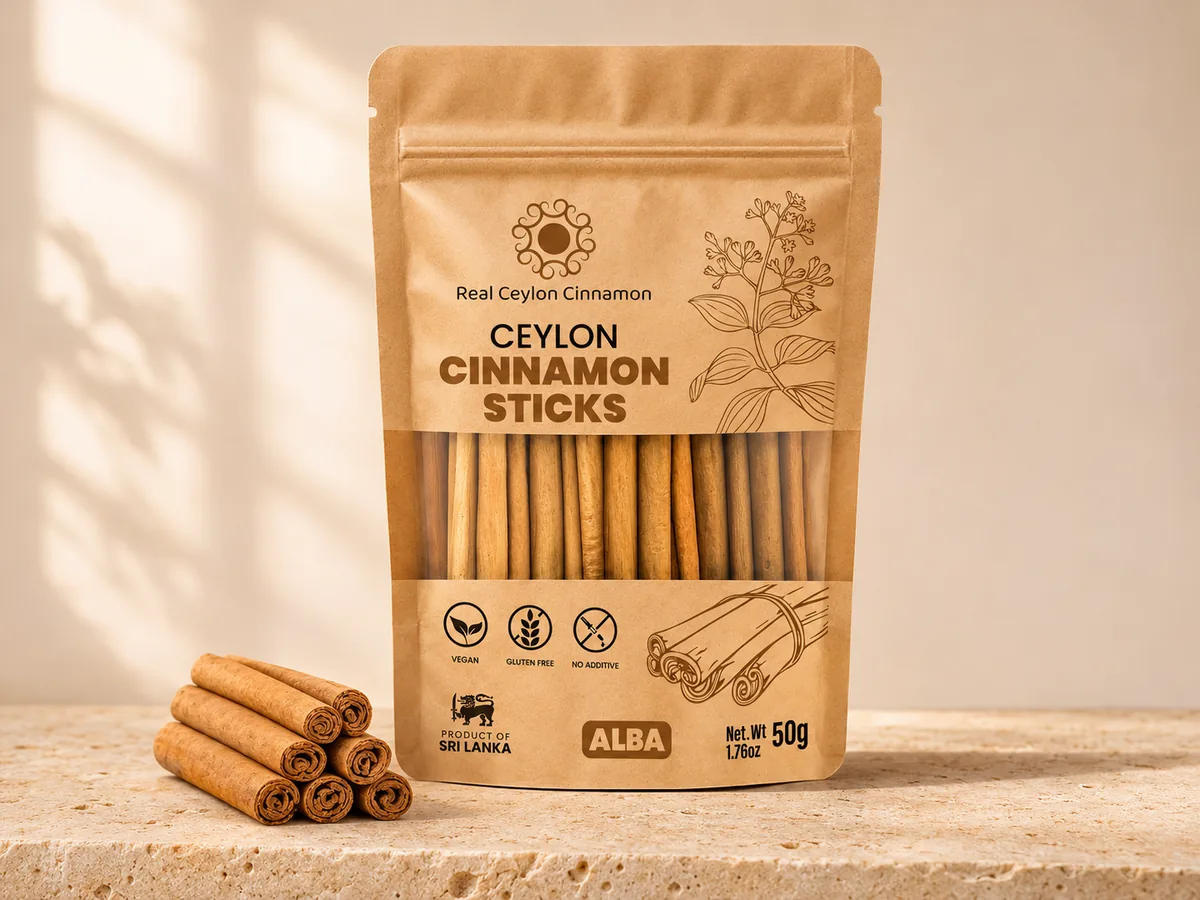
Alba Ceylon cinnamon is the finest grade of true Ceylon cinnamon: thin, hand rolled quills of inner bark from Sri Lanka. Mivoro sells it as whole sticks in three sizes. This guide walks through what the Alba product page says, how it differs from our standard sticks, and whether the premium makes sense for you.
By Carl J., Owner, Mivoro · Last updated 03 November 2026
What Is Alba Cinnamon?
Alba is a grade name, not a separate species. It describes the finest quills of Ceylon cinnamon, Cinnamomum verum, grown in Sri Lanka. The Sri Lanka Export Development Board lists four major grades, Alba, Continental, Mexican, and Hamburg, and names Alba as the most expensive (Sri Lanka Export Development Board on cinnamon).
A quill is the rolled inner bark most people call a cinnamon stick. Mivoro’s listing labels ours Alba, Top Premium Grade, and describes 100% Ceylon cinnamon with nothing added. If you are still weighing Ceylon against the supermarket kind, our guide to Ceylon vs cassia cinnamon covers the difference.
What Does the Alba Product Page Tell You?
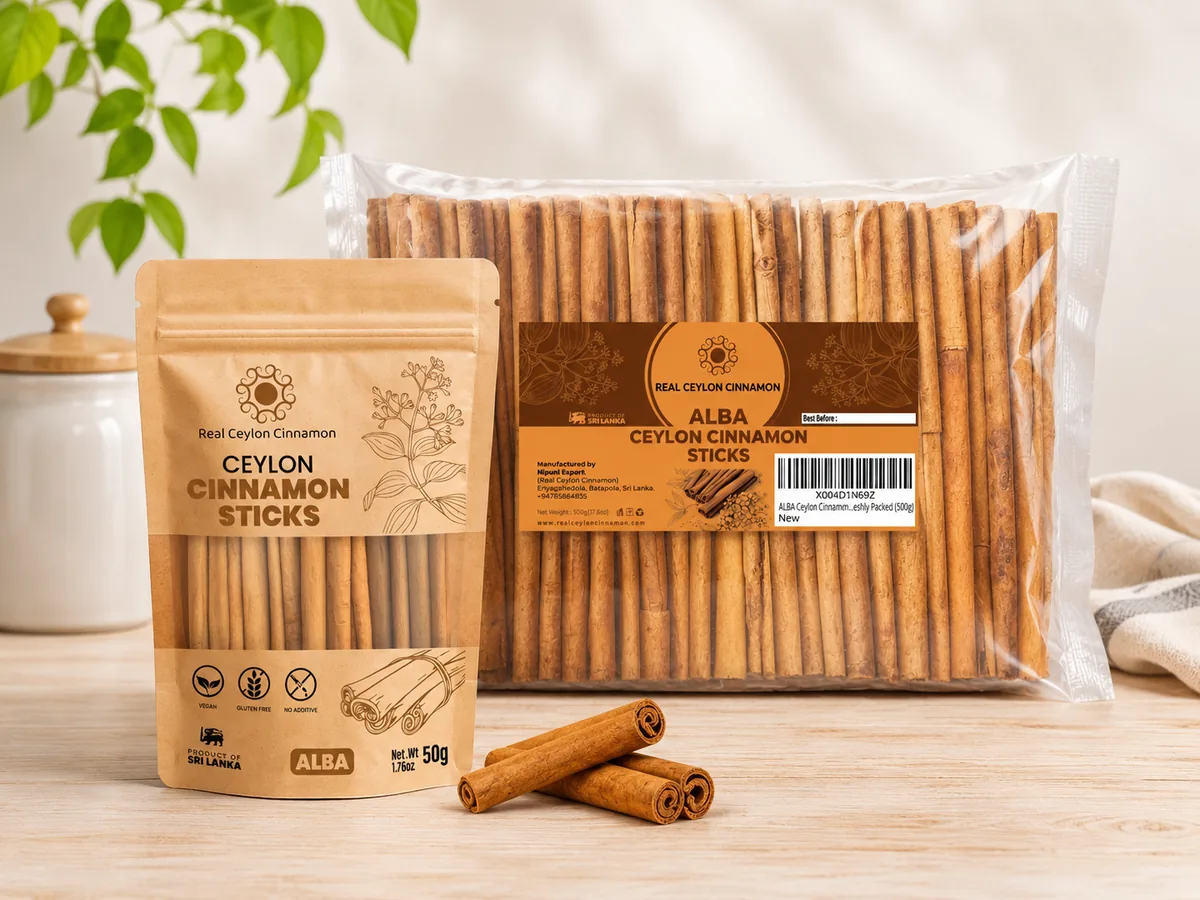
On Mivoro’s Alba Ceylon cinnamon sticks page, the sticks come as whole quills, hand rolled and freshly packed in Sri Lanka. The page describes a light golden brown color and a delicate texture, with a sweet, warm aroma and soft citrus notes. It also says the cinnamon is never cassia. Retail sizes are 50g, 100g, and 500g.
The suggested uses are infusing delicate dishes, brewing tea and coffee, finishing desserts, and gifting. Those are our descriptions of our own product. The page shows no reviews yet. Mivoro also does not publish third party lab results, so the species and grade claims rest on our sourcing. Our guide to checking Ceylon cinnamon authenticity lists what a buyer can verify.
How Does Alba Compare With Mivoro’s Standard Sticks?
Mivoro sells two sticks products. Our Ceylon cinnamon sticks page names no grade and describes a strong, warm flavor with a subtle sweetness, packed in compact resealable packs. The Alba page names its grade and leans delicate, with that sweet, warm, citrus tinged profile. Both pages say true Ceylon, never cassia, and both offer 50g, 100g, and 500g options.
So the real difference between them is the grade and the description, not the species. If you want to see how Alba stacks up against the other forms of Ceylon, our guide to Ceylon cinnamon powder or sticks helps you pick the right shape for your kitchen.
Is Alba Cinnamon Worth the Premium?
The premium is small at Mivoro. As of November 2026, Alba sticks are listed from $9.99 to $28.99, and the standard sticks from $8.99 to $27.99. That is $1.00 more at each end of the range. The pages do not show a price for each size, so divide the price by the grams before you compare packs.
With a gap that narrow, the question is less about money and more about evidence. A Daily Mirror feature on Sri Lanka’s cinnamon industry says the national standard focuses mainly on physical appearance. A grade, then, describes the look of the quill and not a measured taste (Daily Mirror on cinnamon quality standards). In our view, Alba is a fair pick when its finer look and delicate description appeal to you. It is not a guarantee of a better flavor, and nobody should sell it as one.
What Should You Check Before You Buy?
Start with the numbers. Ask any seller for the measured quill diameter and the grading standard they follow. Exporters do not all print identical limits. Then use your senses once the pack arrives: fresh Ceylon should smell sweet and warm, and a faint or musty smell points to age. Our Ceylon cinnamon buying guide covers freshness in more detail.
Finally, read the returns and refund policy before you order, so you know where you stand if the sticks are not what you expected.
Frequently Asked Questions
What makes Alba the top grade?
Size and finish. Sri Lanka’s export board lists Alba with a 6 mm quill, the finest of the major grades. Under the SLS 81:2010 standard, grading also counts the number of whole quills per kilogram and foxing, which are reddish brown patches on the surface.
How is it different in the cup and in baking?
In a cup, you steep a stick in boiling water for 10 to 15 minutes, per Healthline’s guide to cinnamon tea, and then lift it out. We found no source showing that grade changes the taste of that cup. For baking, most recipes call for ground cinnamon, so a quill is usually ground first, or you can reach for our Ceylon cinnamon powder. Where a thin quill clearly shows is on the plate or in the glass.
Why does it cost more than the other grades?
Sri Lankan trade coverage notes that the fine grade sells at a significantly higher price. Mivoro’s page adds that the quills are hand rolled from inner bark. None of the sources we found split the premium into labor, yield, or demand, and we do not publish a cost breakdown, so any single cause would be a guess.
Who is it worth buying for, and who should buy a lower grade?
Alba suits gift jars, plated desserts, and delicate dishes where the quill stays in view, and anyone who simply wants the top grade on the label. A lower grade does the same job if the sticks go into a simmering pot or a batch of mulled drinks and are strained out later. Businesses buying in volume can ask for a quote on the wholesale page.
How should it be stored to protect what you paid for?
Mivoro’s page says to keep it in a cool, dry place away from direct sunlight. A sealed jar or tin also keeps out moisture and strong kitchen smells, though that is our suggestion and not a published test. We do not state a shelf life, so pick a pack you expect to use in good time, and keep the quills whole until you need them.
A Note on Sourcing
You can browse the full range in the Mivoro shop. This guide draws on published sources and our own product pages, and it makes no health claims about any Mivoro product. Grade names and limits vary between exporters, so confirm the details with any seller. Prices and sizes match the listings in November 2026 and can change.
This article shares general buying information, not medical advice. It does not diagnose, treat, cure, or prevent any disease.