
A Ceylon cinnamon brand comparison works best when you line every brand up on the same few facts, not on photos or promises. Species, form, grade, origin, freshness, testing, and price per gram tell you far more than a label’s adjectives. Here is how to compare fairly, and how Mivoro measures up on the same sheet.
By Carl J., Owner, Mivoro · Last updated 04 November 2026
How Do You Compare Ceylon Cinnamon Brands Fairly?
Compare like with like. Put sticks next to sticks and powder next to powder, and convert every price to the same weight before you judge anything. A 50g pouch and a 500g bag are not comparable until both are priced per 100g.
Keep a blank wherever a brand says nothing. It is tempting to fill the gap with a good guess, but a guess is how a marketing line ends up making the decision. A blank is information too, and you can ask the seller to fill it.
Read the front of the pack closely. Plain “cinnamon” with no species named often means cassia, and Healthline notes that almost all the cinnamon sold in supermarkets is cassia, not Ceylon (Healthline on Ceylon vs cassia). Our guide to Ceylon vs cassia cinnamon walks through the difference.
Why Do Ceylon Cinnamon Prices Vary So Much?
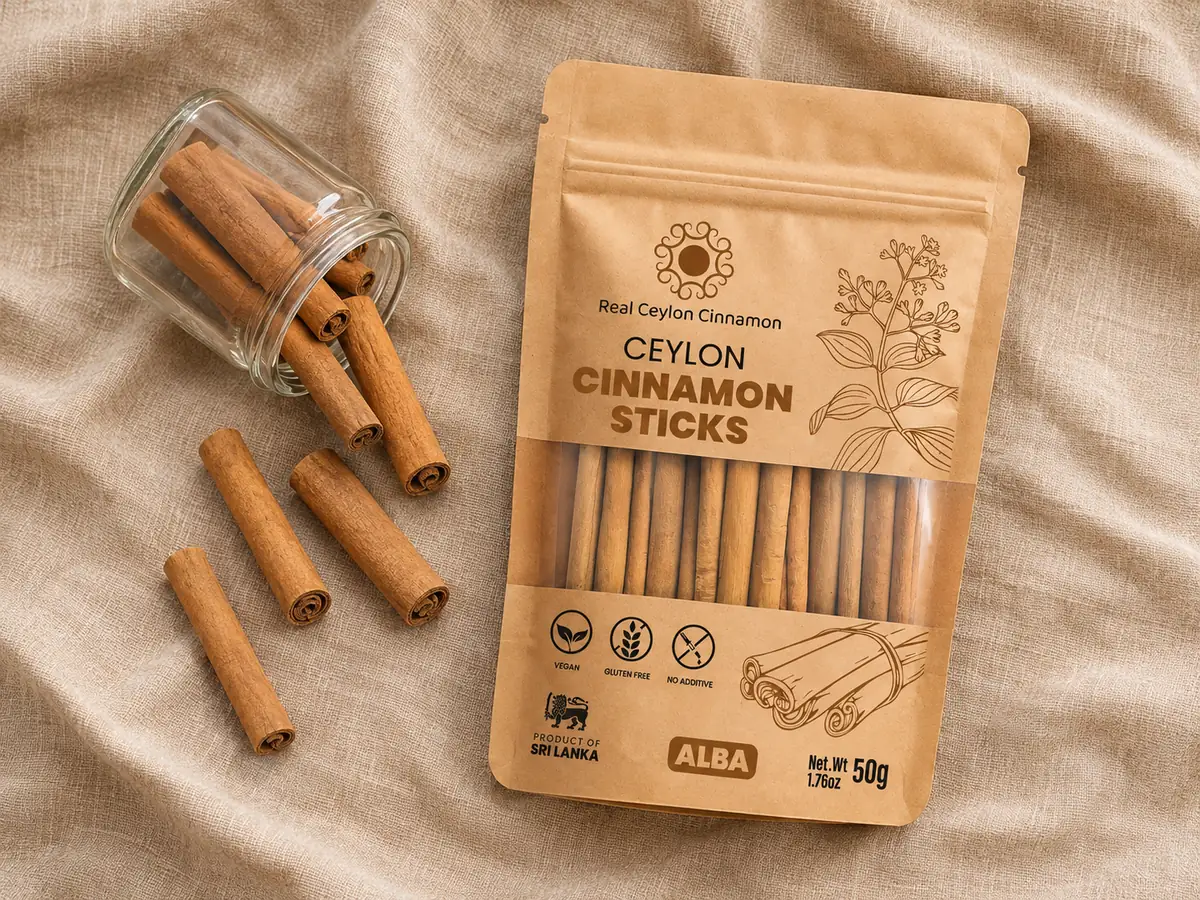
Price follows form, grade, pack size, and seller as much as it follows quality. Mivoro’s own shop shows how wide the spread gets inside one catalog. As of November 2026, our Ceylon cinnamon powder is listed from $7.99 to $13.99, our Ceylon cinnamon sticks from $8.99 to $27.99, our Alba Ceylon cinnamon sticks from $9.99 to $28.99, and our Ceylon cinnamon tea bags from $16.99 to $22.99.
Those are ranges across sizes, and the shop page does not show a price for each size, so the cost per gram is yours to work out. A fine grade also carries a premium of its own: a Daily Mirror feature on Sri Lanka’s cinnamon industry says Alba sells at a significantly higher price than the coarse grades (Daily Mirror on cinnamon quality standards). Add the seller’s own margin and shipping, and a wide spread starts to make sense.
What Did Independent Testing Find Across Brands?
ConsumerLab’s cinnamon review tested ten ground spices and four supplements for compounds that include coumarin and lead. Its public text reports that one spice exceeded the adult coumarin limit at 1 gram a day, and another had lead just above ConsumerLab’s limit (ConsumerLab cinnamon review). The product by product results and its top picks sit behind a paywall, so we cannot tell you which brands did well.
The lesson is not alarm. Brands in the same aisle can differ in ways a label never shows, and species is a large part of that. The Austrian food safety agency AGES lists coumarin in cassia at 1,880 to 3,260 mg/kg, against up to 185 mg/kg in the highest Ceylon sample (AGES on coumarin). Mivoro does not publish third party test results, so we have no number of our own to put beside those.
Where Does Mivoro Stand on the Same Sheet?
Any Ceylon cinnamon brand comparison should include us, so here is our own sheet, filled in plainly. The species is true Ceylon, never cassia, according to our product pages. The origin is Sri Lanka. We sell powder, sticks, Alba sticks, and tea bags, and only the Alba sticks name a grade. We publish no third party test results, we do not claim organic certification, and the Alba page shows no reviews yet. You can see every listing in the Mivoro shop.
If a gap on that sheet matters to you, ask us, and ask every other brand the same question. Our Ceylon cinnamon buying guide covers freshness and packing in more detail.
Frequently Asked Questions
What should you actually compare between brands?
Line up seven facts: the species named in Latin (Cinnamomum verum for Ceylon), the form, the grade or quill size, the origin, the packing or harvest date, any lab results, and the price per 100g. Anything a brand does not state stays an open question.
Why does the price range vary so widely for the same product?
Often it is not the same product. A low price on a bag marked Ceylon can hide cassia, older stock, a coarser grade, or a lighter pack. Check the species named, the date packed, and the price per 100g before you decide that a gap is pure markup.
Does grade or origin explain more of the difference?
Grade explains more of the price gap among sticks. Under Sri Lanka’s SLS 81:2010 standard, it sorts quills by diameter, number of whole quills per kilogram, and foxing, which means reddish brown patches. Origin explains less, because a Sri Lankan label does not by itself prove the species or a clean lot. Treat grade as a price factor and origin as a claim to verify.
What does a brand not telling you something usually mean?
Rarely one thing. The data may not exist, may sit with a supplier, or may not flatter the product. Silence is not proof of a problem, but it leaves you unable to check, so treat it as an unknown and ask. A brand that answers specifically has earned more trust than one that repeats its label.
How do you verify a claim rather than take it on trust?
Ask for the lot number and a certificate of analysis from an independent lab, then read what it covers: species, contaminants, or both. Compare what arrives with the listing, including color and aroma. The checks a buyer can run at home are listed in our guide to checking Ceylon cinnamon authenticity.
A Note on Sourcing
This guide draws on published sources and our own product pages, and it makes no health claims about any Mivoro product. We name no competing brand and rank none. Grade names and limits vary between exporters, so confirm the details with any seller. Prices and sizes match the listings in November 2026 and can change.
This article shares general buying information, not medical advice. It does not diagnose, treat, cure, or prevent any disease.