
To choose moringa powder, read the label first, then check the color, the grind, and the taste. A good one is leaf only, green rather than brown, finely milled, and mild with a grassy edge. This guide shows you how to run each check yourself before you commit to a pouch.
By Carl J., Owner, Mivoro · Last updated 28 October 2026
How Do You Choose a Good Moringa Powder?
Start with the label, because it tells you more than the photo on the front. Look for the plant part (leaf), the species (Moringa oleifera), a country of origin, and an ingredient list with nothing else on it. Then buy a small size first and inspect it by sight, smell, and taste.
Northwestern Medicine says moringa products vary in content and contaminants, because the plant accumulates heavy metals from soil. It points readers to reputable brands with quality testing and says third party testing can help confirm that a product holds what it claims (Northwestern Medicine’s guide to moringa). It also notes that the FDA does not approve supplements. In practice, you can fairly ask any seller, including us, for a certificate of analysis. Mivoro does not currently publish third party lab results, and we would rather say so than imply otherwise.
Organic is a separate question. It is a certification, so look for a certifier’s seal instead of the word “natural.” Mivoro’s Premium Moringa Powder does not carry organic certification, and our organic buying guide explains how to verify a seal on any spice. For a deeper look at drying and freshness, see our guide to a quality moringa powder, and for price and everyday use, our moringa leaf powder guide. This page is the quick version of how to choose moringa powder at the shelf or the checkout.
Leaf or Seed Moringa Powder: Which Should You Buy?
For food and drinks, buy leaf powder. Cleveland Clinic says the leaves and pods are the parts to eat, that the roots, bark, and flowers are not safe to eat, and that people sometimes use the seeds as a spice or seasoning agent (Cleveland Clinic’s introduction to moringa). The Northwestern Medicine article quotes an expert who says most safety and efficacy data pertain to the leaves, while roots, bark, and seeds have different phytochemical and risk profiles.
In practice, the difference shows up on the label. A leaf powder says moringa leaf. A product that says only “moringa,” or lists a blend of parts, leaves you guessing. Pick a label that names the part. If a seller offers seed powder, ask what it is meant for and how to use it, since the sources treat seeds as a separate ingredient. Mivoro’s moringa product is leaf powder only.
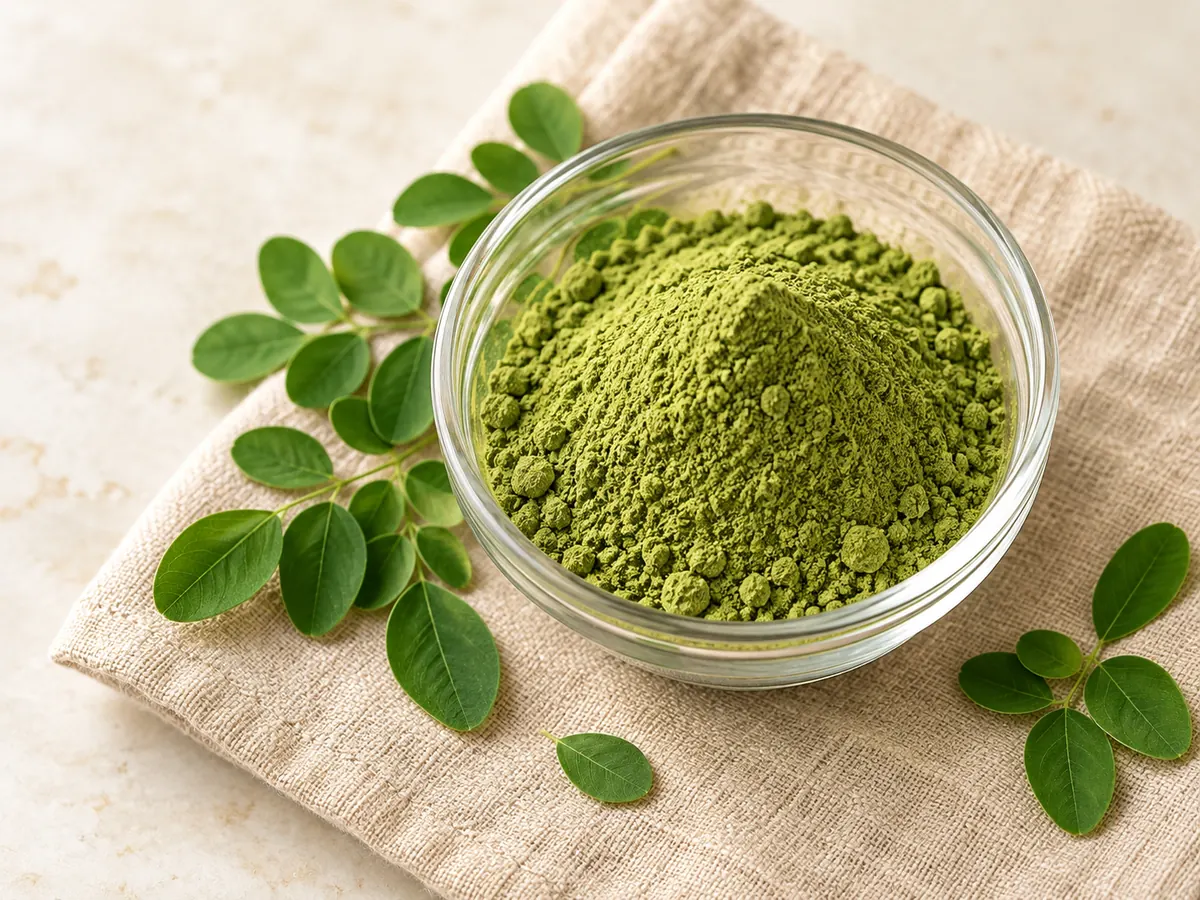
What Color Should Moringa Powder Be?
Green. A good moringa powder runs from a fresh, lively green to a deeper olive, and that range is normal, because the leaves, harvest timing, and drying all change the shade. Dull brown or gray is the warning sign, and so is a powder that looks faded next to its own product photo.
Color is also a freshness clue. A study published in Molecules tested stored moringa powder and found that storage temperature and packaging type affect its color (Molecules study on storage and packaging). Our quality guide summarizes what the researchers found about light, heat, and opaque packaging.
Color alone cannot prove quality, though. Mivoro’s product page describes a vibrant natural color, and we do not publish a color chart. Judge any bag, ours included, in daylight and together with the smell and texture.
How Finely Should Moringa Powder Be Ground?
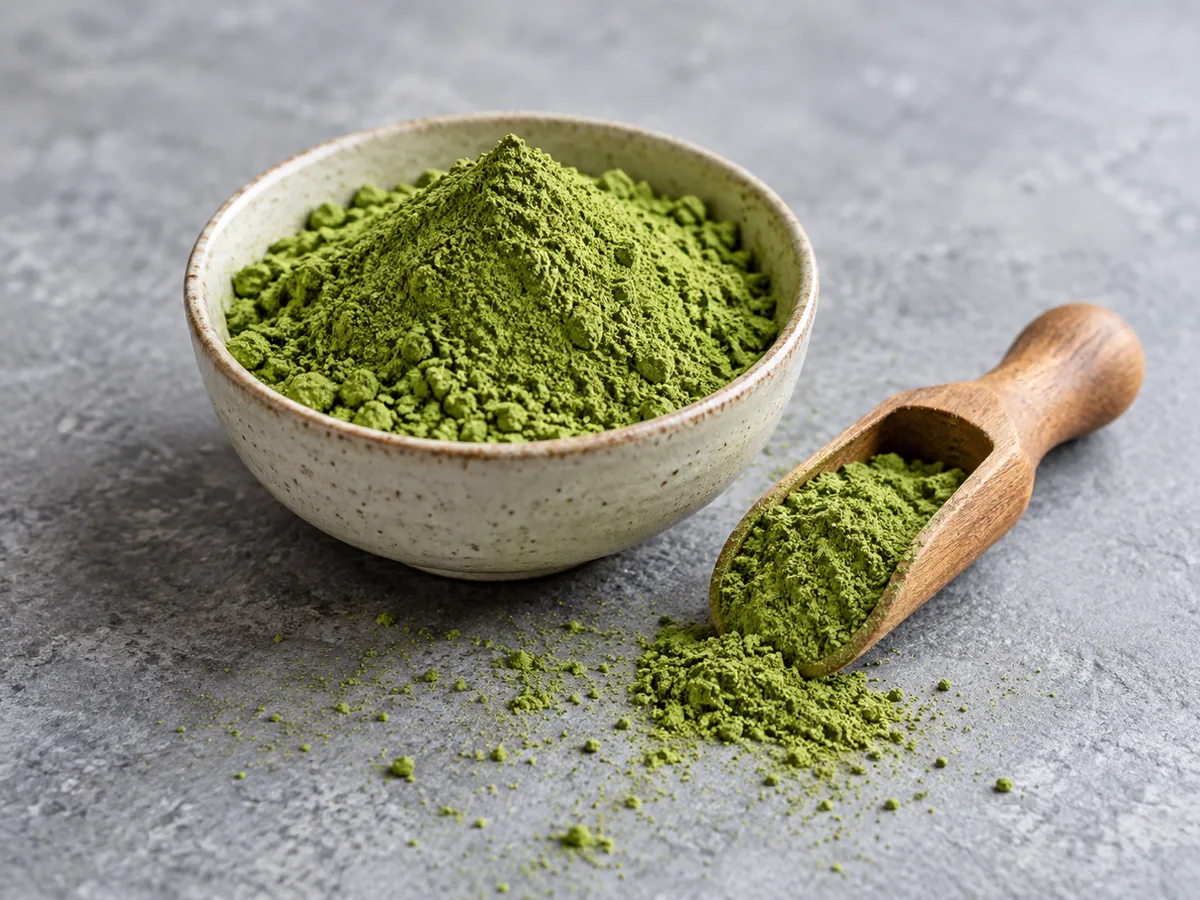
Fine and smooth, closer to matcha or flour than to crushed herbs. Rub a pinch between your fingers. It should feel soft and powdery, with no sticks, stems, or gritty flecks. In our view, coarse bits suggest a light crush, and they make drinks gritty.
Finer is not automatically better. One lab study compared a household ground and sieved moringa leaf powder with two ball milled samples (study of milled moringa leaf powder). The finer powders flowed more easily and scored higher on water solubility. They also looked lighter, and the authors tied part of the lost greenness to heat during milling. That was a laboratory setup, not a commercial mill, so treat it as a reason to judge grind and color together.
Mivoro’s page calls its powder finely milled and gives no particle size or mesh number, so we cannot offer one. Whisk any moringa powder into a splash of liquid first to break up clumps before adding it to a larger drink.
What Should Moringa Powder Taste and Smell Like?
Mild, earthy, and grassy, with a slight bitter edge. Northwestern Medicine calls the taste mild, earthy, and slightly bitter, like leafy greens such as arugula or spinach. Cleveland Clinic says the fresh leaves taste bitter and peppery, a bit sharper than arugula, and that the powder is a bit grassier, like matcha.
So some bitterness and grassiness belongs to the plant and is not a defect. What you watch for is a change from that baseline. In our view, a powder that smells musty, dusty, or like old hay, or that tastes flat, harsh, or burnt, is telling you about age, moisture, or rough handling. These are practical signs, not lab results.
Try a simple test. Smell the dry powder first, then stir a pinch into warm water and taste it. You are looking for a clean, green, mild flavor. Mivoro’s page describes its flavor as mild, earthy, and green, and our beginner’s guide to using moringa powder covers ways to blend it into food.
Which Moringa Powder Is Highest Quality?
No source we found ranks moringa brands, and we would not trust a page that claims to, ours included. Quality shows up as a set of checks that agree with each other: leaf only on the label, a named origin, a green color, a fine grind, a mild grassy taste with no musty edge, and a seller who tells you what they have and have not tested.
Mivoro’s Premium Moringa Powder is 100 percent moringa leaf with nothing added, grown and processed in Sri Lanka. It comes in 50g and 100g sizes, priced from $7.99 to $13.99 in October 2026. It has no organic certification, we do not publish third party lab results, and the product page states no drying method or shelf life. Judge it with the same checks you would use on any other bag. Our moringa guide explains what the powder is, and our superfood powders guide shows how it sits next to other green powders. If you are weighing powder against capsules, our moringa powder vs capsules comparison covers what changes. For what the shop stocks and where it comes from, see our guide to buying from the Mivoro shop.
Once you have chosen, storage protects the choice. WebMD says dried leaves ground into a fine powder keep many months without refrigeration, and it gives no exact figure (WebMD’s moringa powder overview). Mivoro’s page recommends an airtight container in a cool, dry place away from sunlight.
Frequently Asked Questions
What color should good moringa powder be?
Green, from fresh and lively to a deeper olive. Dull brown or gray points to age, heat, or light exposure. Judge it in daylight and alongside the smell, because honest products vary in shade.
Leaf or seed: what is the difference in practice?
Leaf is the part sources treat as food, and it carries most of the safety data. Seeds are a separate ingredient with a different profile. For cooking and drinks, pick a label that names the leaf.
What does a bitter or grassy taste tell you?
A little of both is normal, since sources describe moringa as mildly bitter and grassy, a bit like matcha or spinach. A harsh, burnt, musty, or flat taste is the red flag. It points to age, moisture, or rough handling.
How finely should it be ground?
Fine and smooth, like matcha or flour, with no sticks or gritty flecks between your fingers. Finer is not always better, because a lab study found that heavy milling also changed the color.
How long does it keep and how should it be stored?
WebMD says only that it keeps many months without refrigeration, with no exact figure. Check the pack for a date, keep it airtight, cool, dry, and dark, and use a dry spoon each time.
A Note on Sourcing
You can browse the full range in the Mivoro shop. For what research does and does not show about moringa, see our summary of moringa powder research. This guide summarizes published sources and our own product page, and it makes no health claims about any Mivoro product.
This article shares general buying information, not medical advice. It does not diagnose, treat, cure, or prevent any disease. Talk to a healthcare provider before adding moringa to your routine, especially if you are pregnant, nursing, managing a health condition, or taking medication.